

Meniscus Tear
The menisci are the knee’s shock absorbers. A tear can happen on the sports field or simply with age — and the treatment differs accordingly.

Specializing in Sports Medicine, Arthroscopy & Joint Replacement
- German Board-Certified Orthopaedic Surgeon
- DKG Certified Knee Surgeon
- AGA Certified Arthroscopic Surgeon
- GOTS Certified Sports Physician
- FIFA Diploma in Football Medicine
- International Experience (Germany & the GCC)
- Former Chief of Orthopaedic Surgery (Germany)
- 14+ Years of Experience
Each knee has two menisci — C-shaped wedges of tough cartilage that sit between the thigh and shin bones. They cushion load, spread weight evenly, and help stabilise the joint.
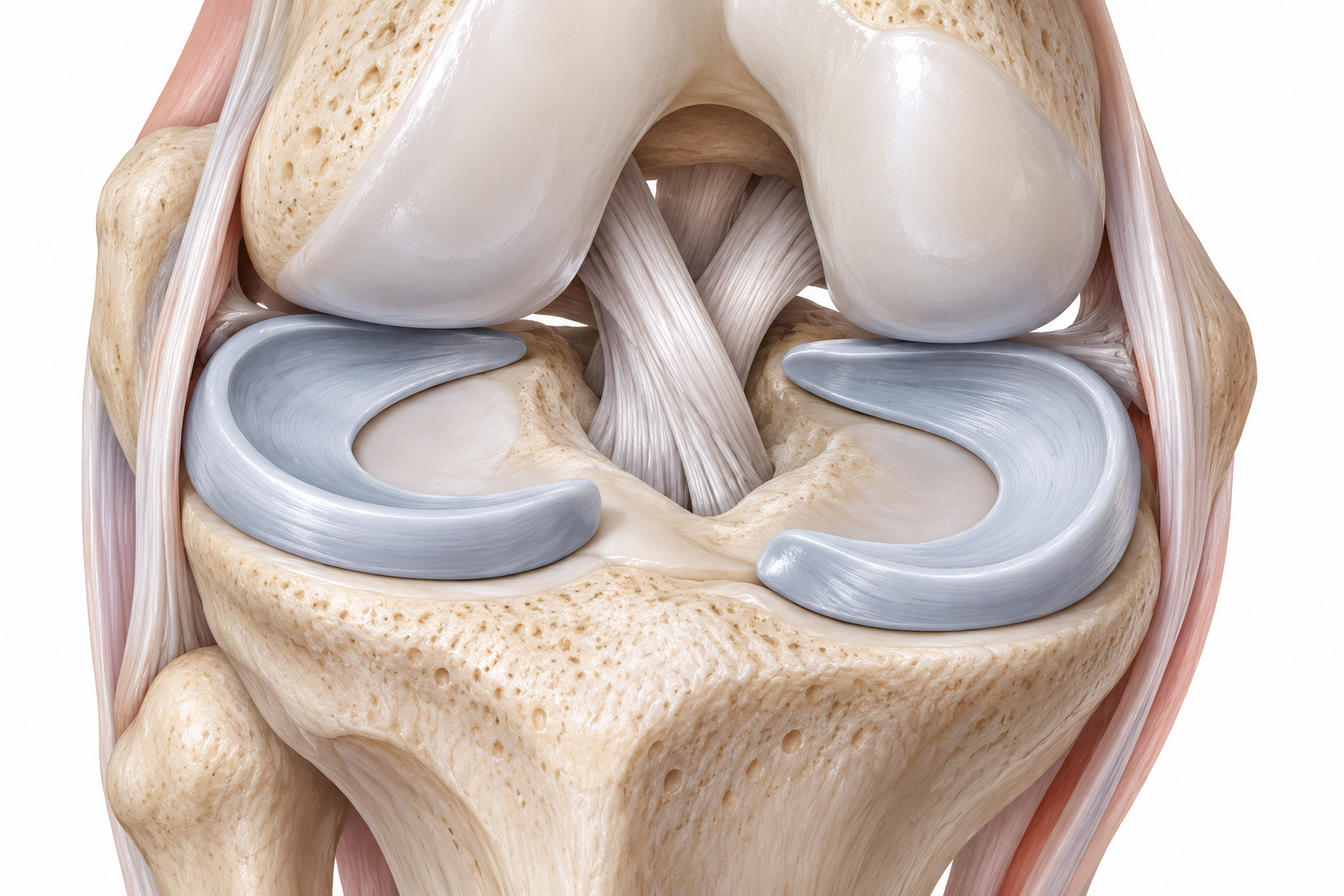 Anatomy diagram
1. Anatomy & Overview
Each knee has two menisci — C-shaped wedges of tough cartilage that sit between the thigh and shin bones. They cushion load, spread weight evenly, and help stabilise the joint.
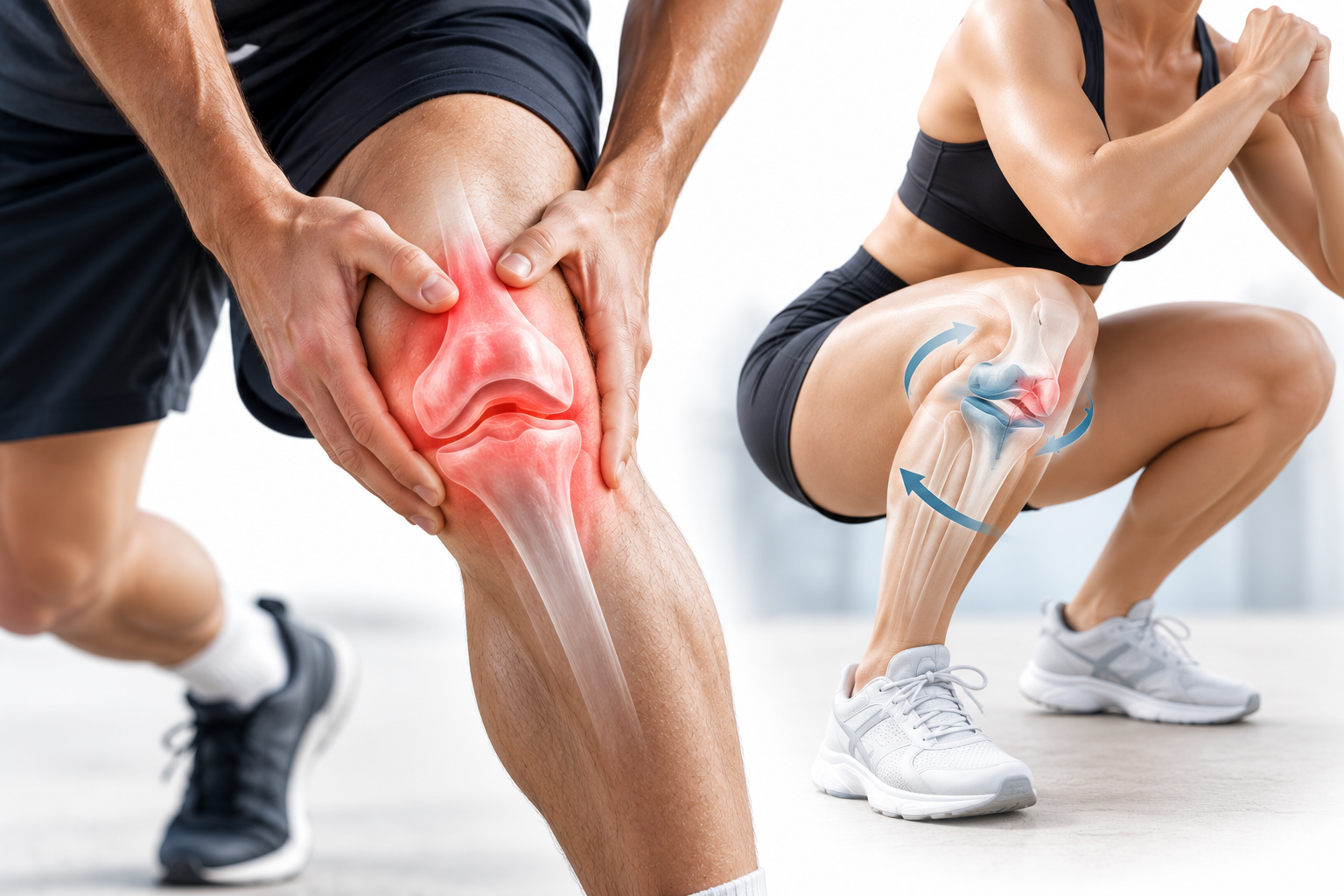 Clinical examination
2. Signs & Symptoms
Pain along the joint line, swelling, and catching or locking during movement — symptoms are often worse with twisting, pivoting, or deep squatting.
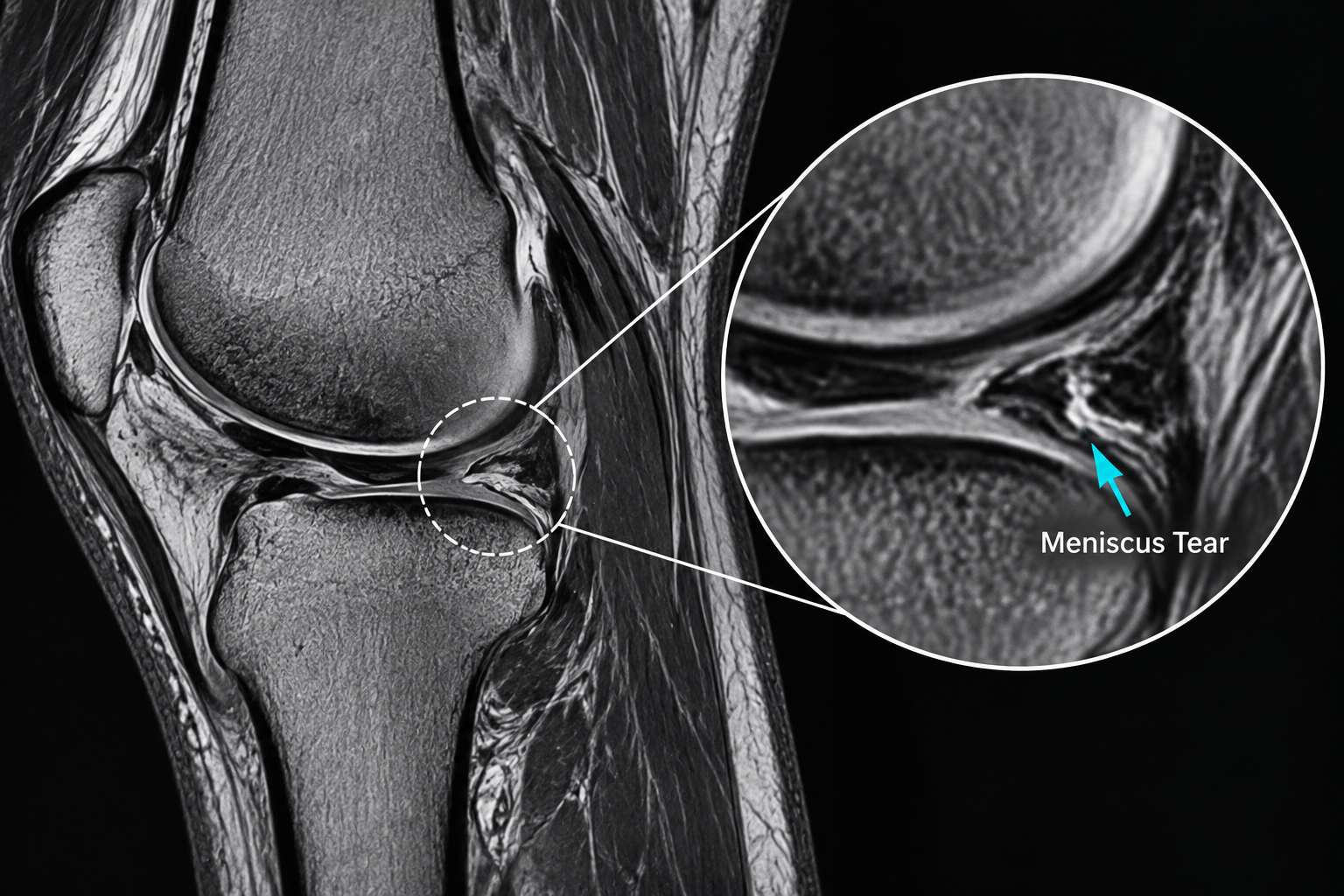 Diagnostic imaging
3. Diagnosis & Imaging
Clinical evaluation includes targeted joint-line palpation and rotation tests, combined with high-resolution MRI to confirm the exact tear pattern and location.
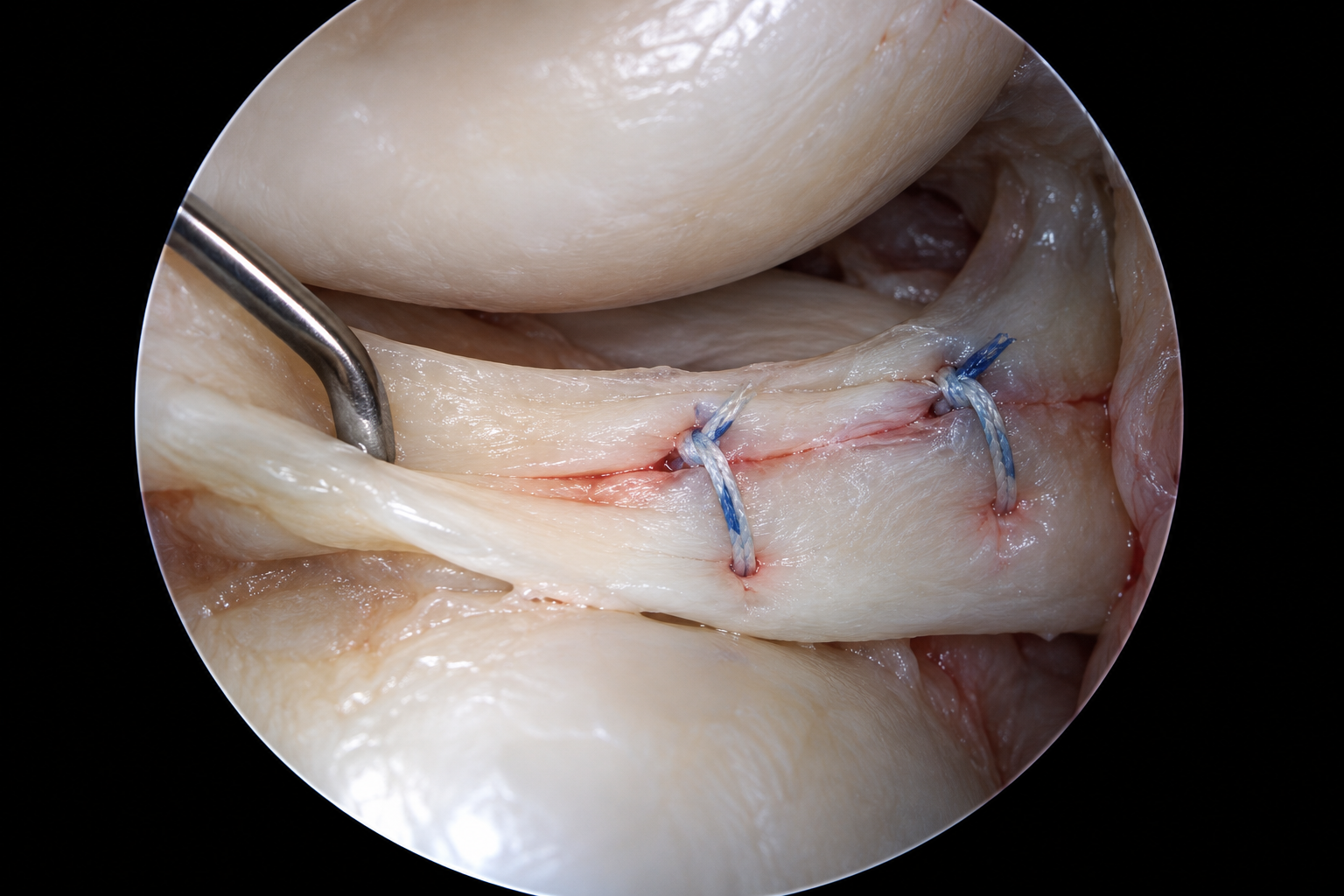 Treatment
4. Treatment Options
The primary goal is meniscal preservation. Depending on the tear type, we perform arthroscopic meniscus repair (suturing) or targeted partial meniscectomy.
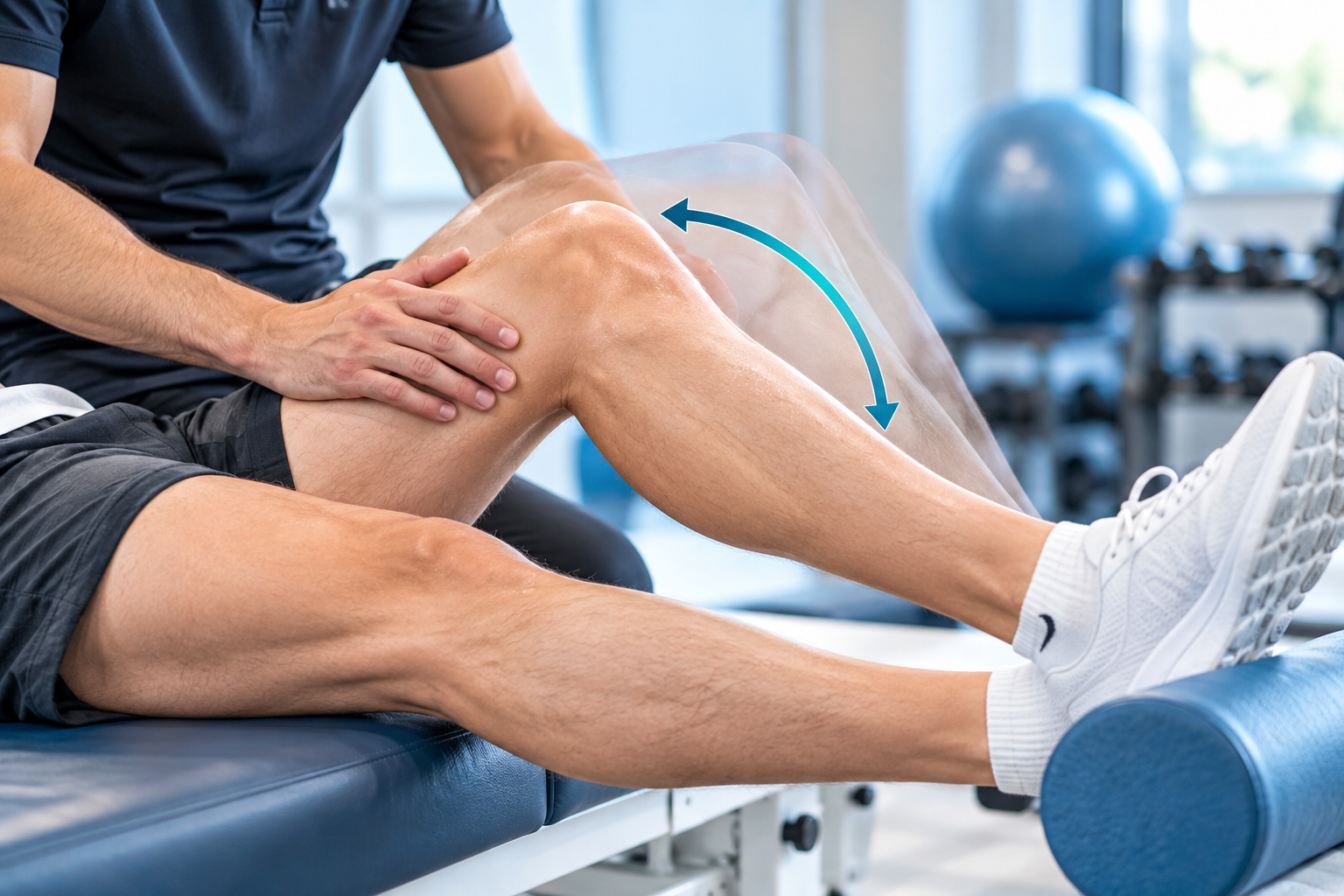 Rehabilitation
5. Recovery & Rehabilitation
Recovery depends on the procedure: partial trims allow rapid weight-bearing, while meniscus repairs require a structured protocol to protect the stitch line and restore full stability.
The menisci are the knee’s shock absorbers. A tear can happen on the sports field or simply with age — and the treatment differs accordingly.

Frequently Asked Questions
Is it better to repair (stitch) or trim (remove) a torn meniscus?
Can a meniscus tear heal on its own without surgery
Why does my knee lock or catch, and can I walk with a meniscus tear?
Is an MRI mandatory to diagnose a meniscus tear?
When can I return to sports and daily activities after meniscus surgery?
Note: This information is for general education only and should not replace a consultation with your doctor.
International Medical References
 American Academy of Orthopaedic Surgeonsaaos.org
 European Society of Sports Traumatology, Knee Surgery & Arthroscopyesska.org
 American Orthopaedic Society for Sports Medicinesportsmed.org
 Deutsche Kniegesellschaft (German Knee Society)dkg-online.de
 Society for Arthroscopy and Joint Surgeryaga-online.ch
Related Conditions


Book an Appointment
Secure your consultation today.
WhatsApp Us
Quick response for your enquiries.