

Patellofemoral Pain Syndrome
Pain at the front of the knee, around or behind the kneecap, is one of the most common complaints we see — especially in active people. The good news is that it almost always responds to the right rehabilitation.

- German Board-Certified Orthopaedic Surgeon
- DKG Certified Knee Surgeon
- AGA Certified Arthroscopic Surgeon
- GOTS Certified Sports Physician
- FIFA Diploma in Football Medicine
- International Experience (Germany & GCC)
- Former Chief of Orthopaedic Surgery (Germany)
- 14+ Years of Experience
Patellofemoral pain syndrome describes pain arising from the joint between the kneecap (patella) and the groove in the thigh bone it glides along. When the kneecap does not track smoothly through that groove, the surfaces are loaded unevenly and the front of the knee becomes painful.
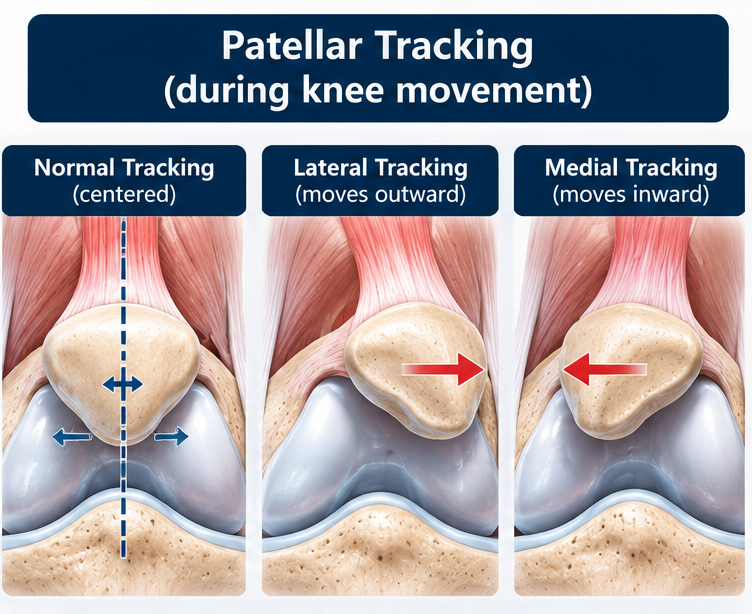 Anatomy diagram
1. Anatomy & Overview
Patellofemoral pain syndrome describes pain arising from the joint between the kneecap (patella) and the groove in the thigh bone it glides along.
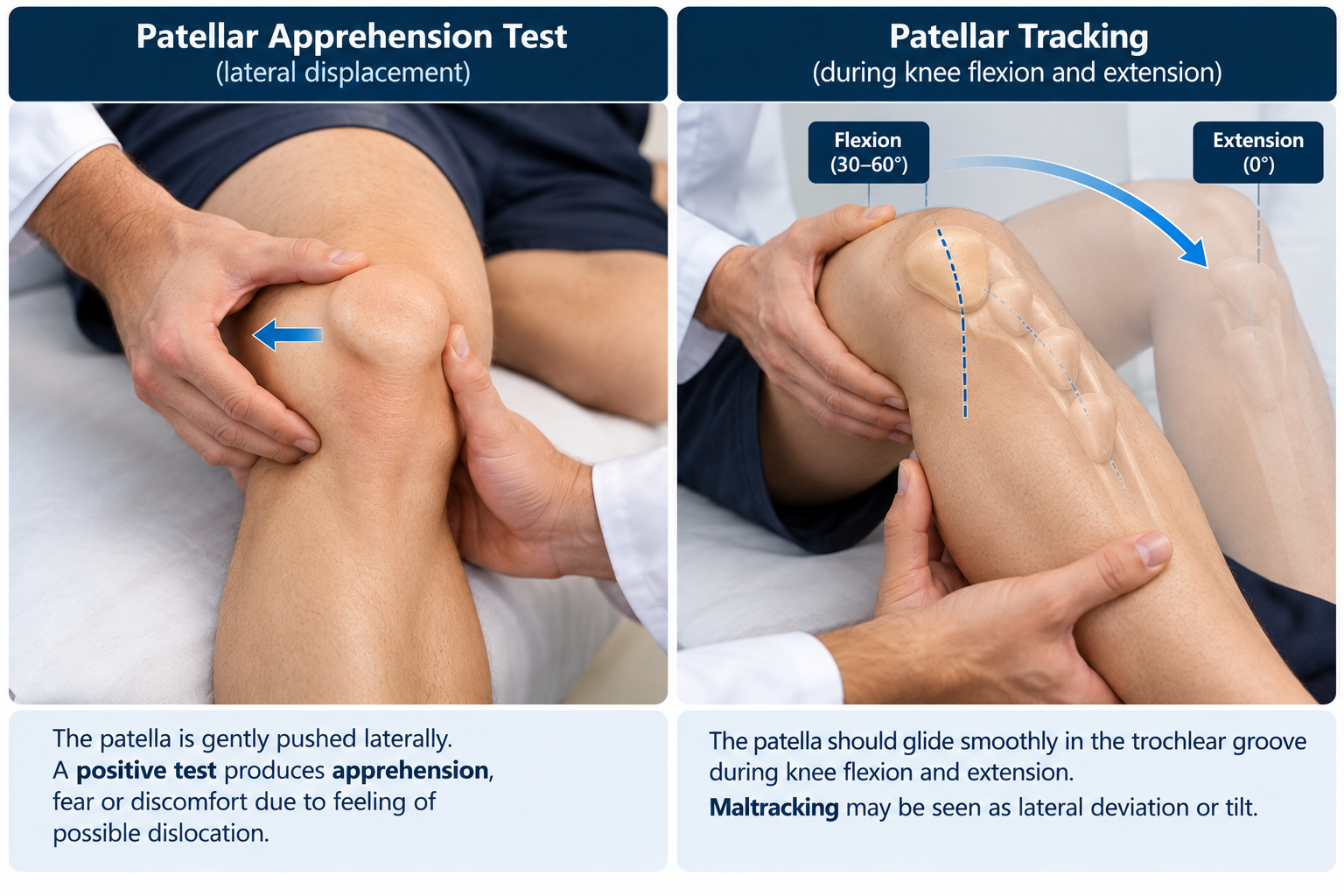 Clinical examination
2. Signs & Symptoms
A dull ache at the front of the knee — around or behind the kneecap.
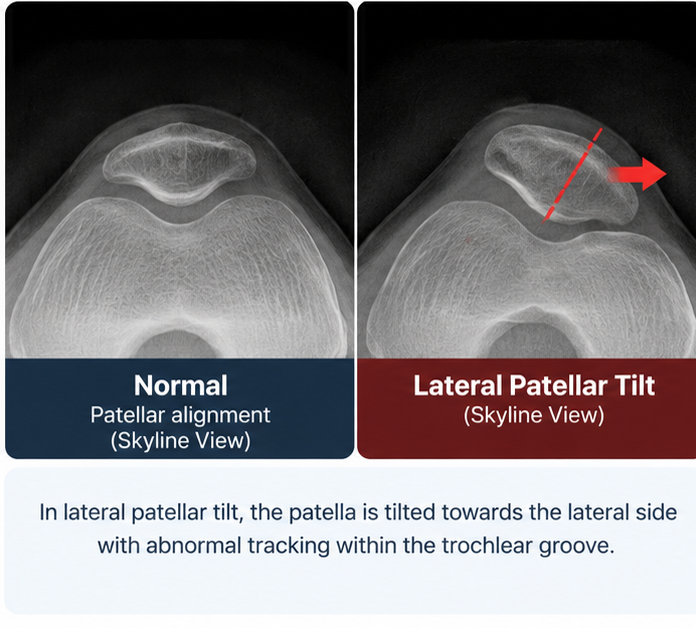 Diagnostic imaging
3. Diagnosis & Imaging
Diagnosis is largely clinical: a careful history and an examination of how the kneecap tracks, the strength of the hip and thigh, and which movements reproduce the pain.
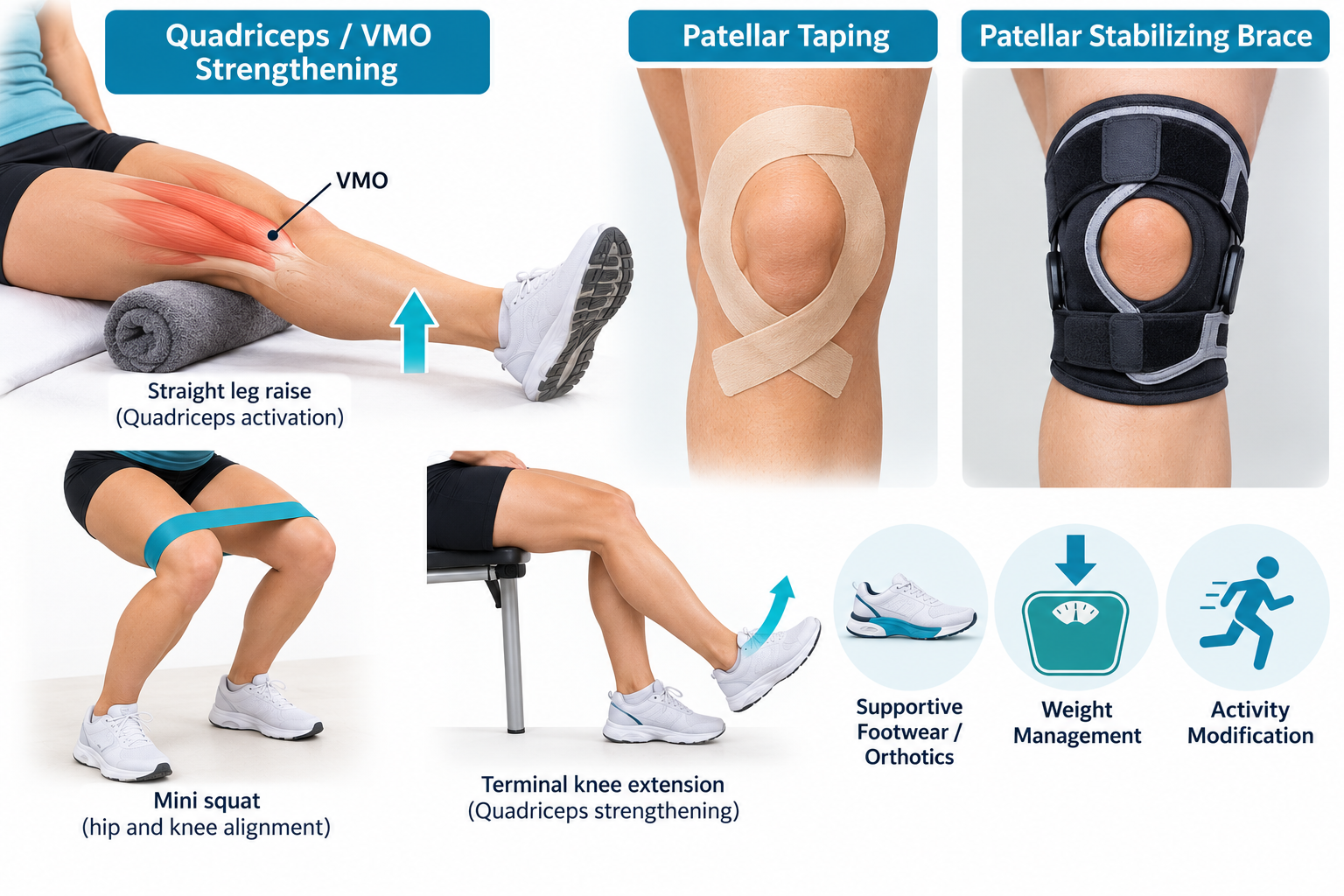 Treatment
4. Treatment Options
The cornerstone of treatment is a structured exercise programme that restores balanced strength and movement — surgery is very rarely needed.
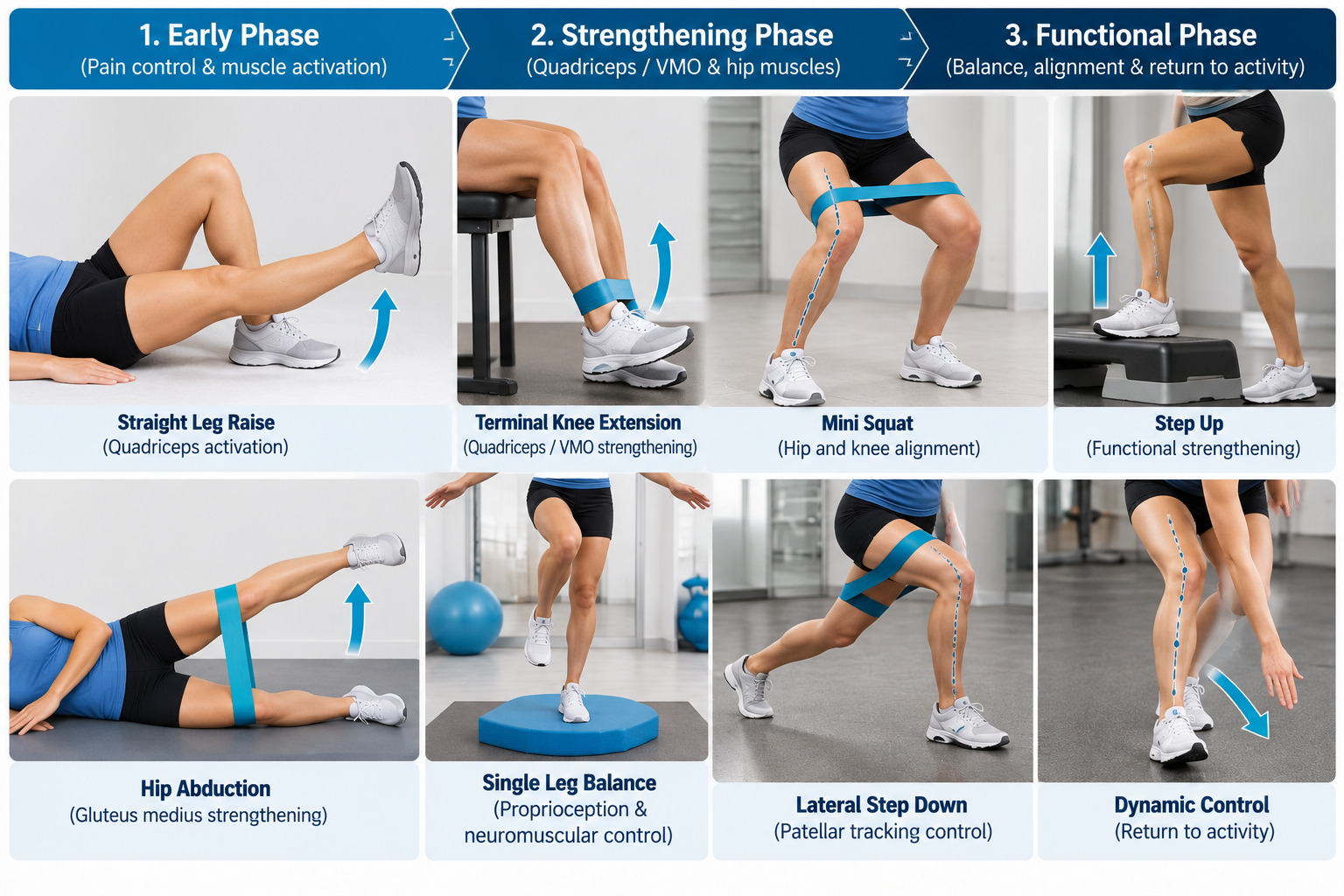 Rehabilitation
5. Recovery & Rehabilitation
Most patients improve substantially within a few weeks to a few months of consistent rehabilitation, and go on to return fully to their sport.
Front-of-knee pain almost never needs an operation. It needs the right rehabilitation — and the patience to let strength catch up with ambition.

Frequently Asked Questions
Why does patellofemoral pain worsen when climbing stairs, squatting, or sitting for long periods?
Can knee braces, orthotics, or patellar taping help manage front-of-knee pain?
Is surgery required for Patellofemoral Pain Syndrome, or can it be cured non-surgically?
How long does recovery take, and when can I return to running and sports safely?
Which exercises and physical therapy strategies are most effective for kneecap pain?
Note: This information is for general education only and should not replace a consultation with your doctor.
International Medical References
 American Academy of Orthopaedic Surgeonsaaos.org
 European Society of Sports Traumatology, Knee Surgery & Arthroscopyesska.org
 American Orthopaedic Society for Sports Medicinesportsmed.org
 Deutsche Kniegesellschaft (German Knee Society)dkg-online.de
 Society for Arthroscopy and Joint Surgeryaga-online.ch
Related Conditions


Book an Appointment
Secure your consultation today.
WhatsApp Us
Quick response for your enquiries.