

Multiligament Knee Injury
Multiligament knee injuries occur when two or more primary ligaments (ACL, PCL, MCL, or LCL) are torn, often following high-energy trauma or severe joint dislocations. Precision diagnostic imaging, tailored surgical reconstruction, and phased rehabilitation are essential to restore joint stability and protect long-term knee function.

Specializing in Sports Medicine, Arthroscopy & Joint Replacement
- استشاري جراحة العظام حاصل على شهادة البورد الألماني
- جراح ركبة معتمد من DKG
- جراح تنظير مفاصل معتمد من AGA
- طبيب رياضي معتمد من GOTS
- دبلوم الفيفا في طب كرة القدم
- خبرة دولية ألمانيا ودول مجلس التعاون الخليجي
- رئيس سابق لقسم جراحة العظام (ألمانيا)
- أكثر من ١٤ عامًا من الخبرة
The knee relies on four primary ligaments — the ACL, PCL, MCL, and LCL — to maintain stability and alignment. A multiligament injury occurs when two or more of these crucial structures are torn, often resulting from high-energy trauma or severe sports impacts. Because these complex injuries frequently involve joint instability and potential neurovascular risk, precise surgical reconstruction and a meticulously planned rehabilitation protocol are essential to restore complete function and joint stability.
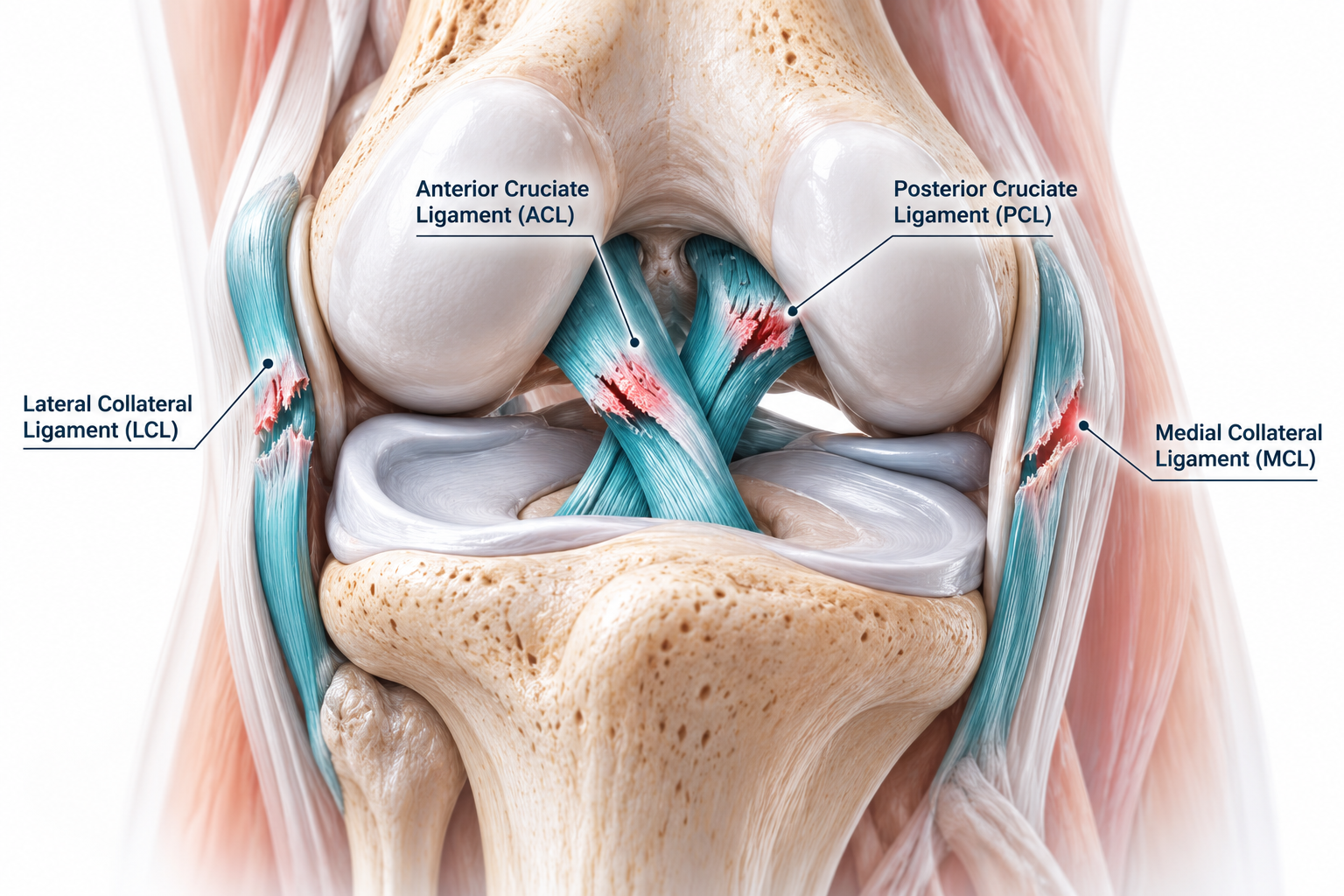 رسم تشريحي
1. Anatomy & Mechanisms
Complex knee stability relies on a balanced network of major ligaments. A multiligament injury occurs when two or more ligaments are disrupted, typically from severe joint dislocation or high-impact athletic trauma..
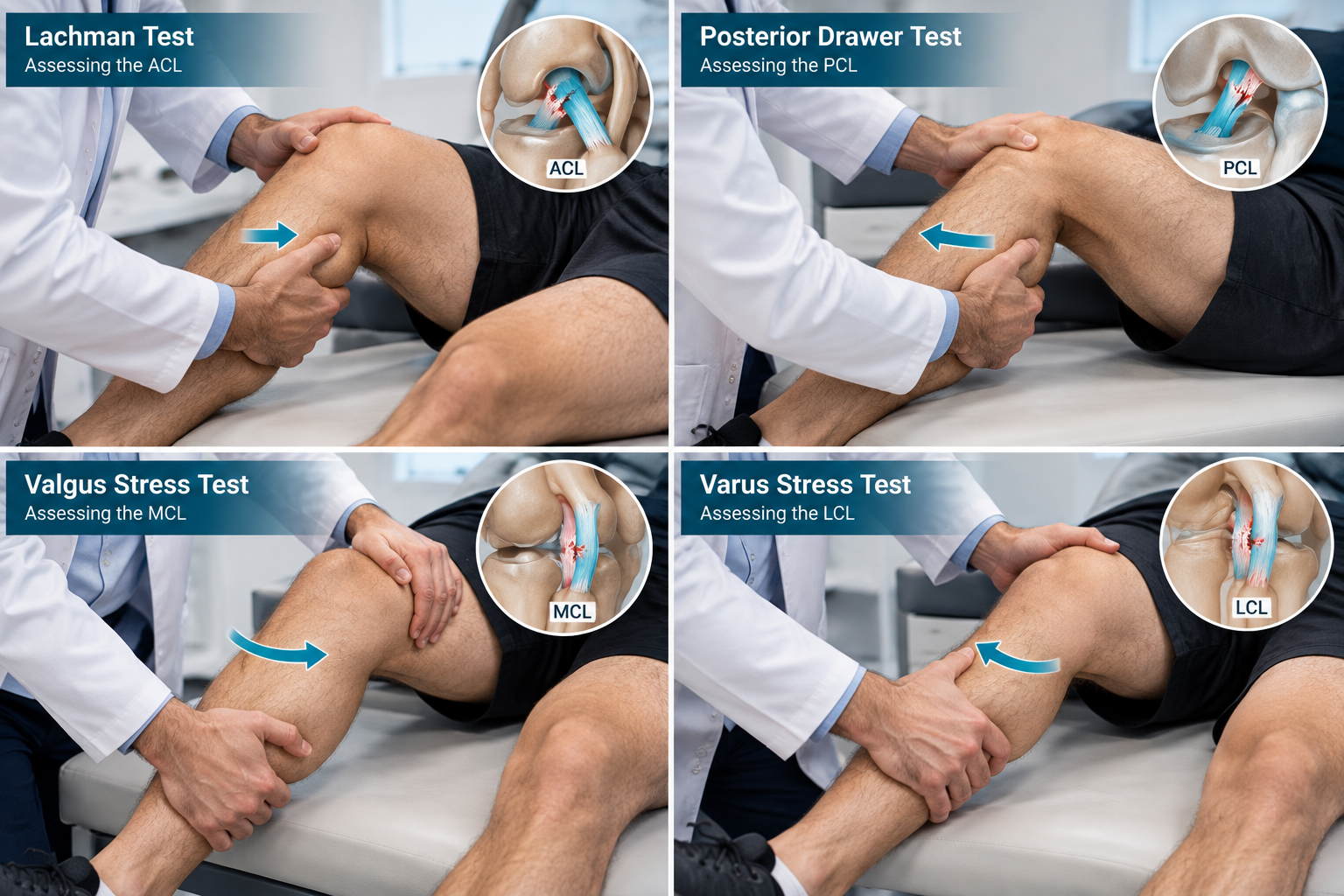 الفحص السريري
2. Emergency & Clinical Assessment
Immediate and thorough clinical evaluation is critical. Beyond assessing ligamentous laxity, we carefully evaluate neurovascular integrity to ensure prompt, safe, and effective surgical planning.
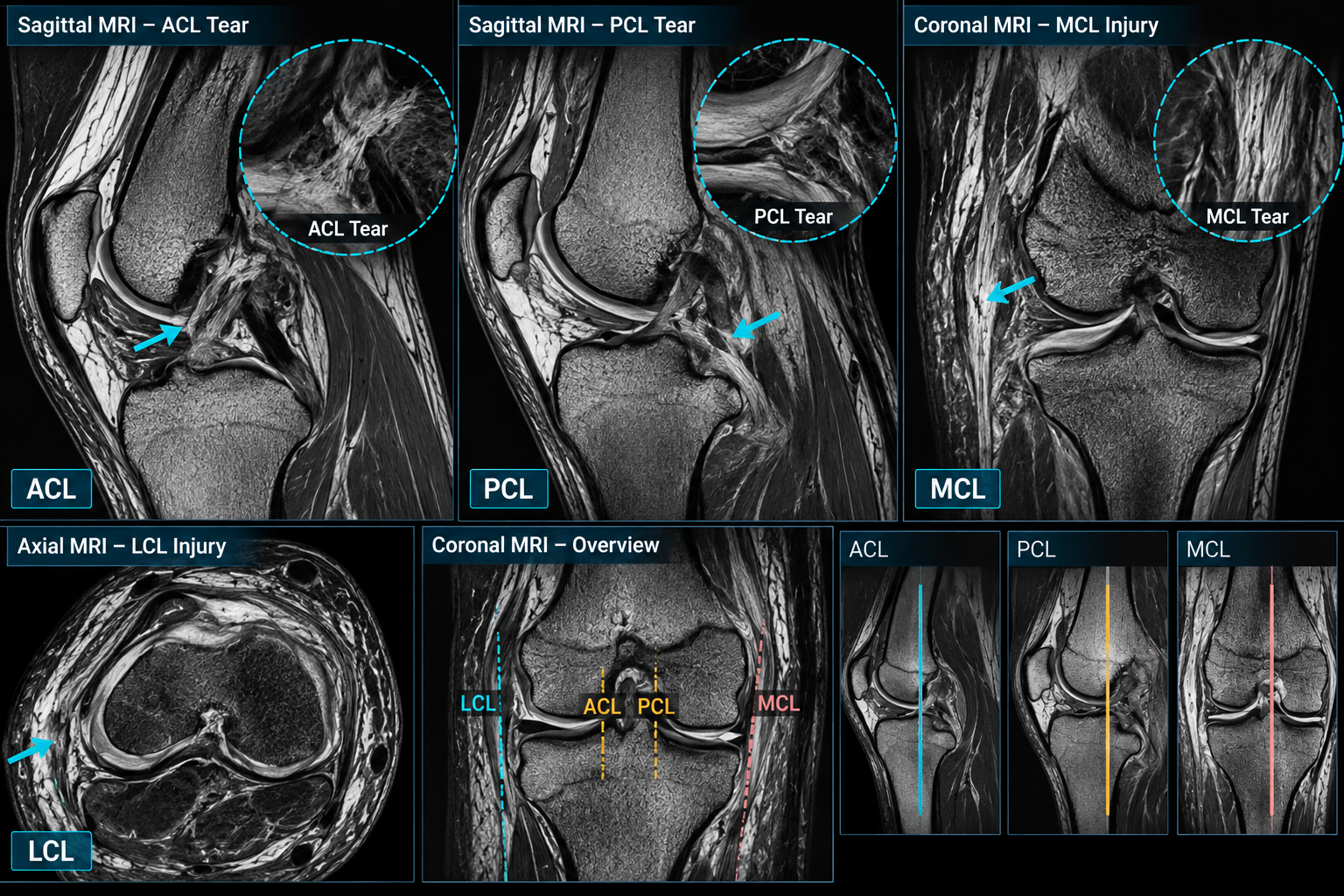 التصوير التشخيصي
3. Advanced MRI & Stress Radiographs
High-resolution MRI and specialized stress radiographs map the exact combination of ligament tears, meniscus damage, and articular involvement, guiding a tailored surgical strategy.
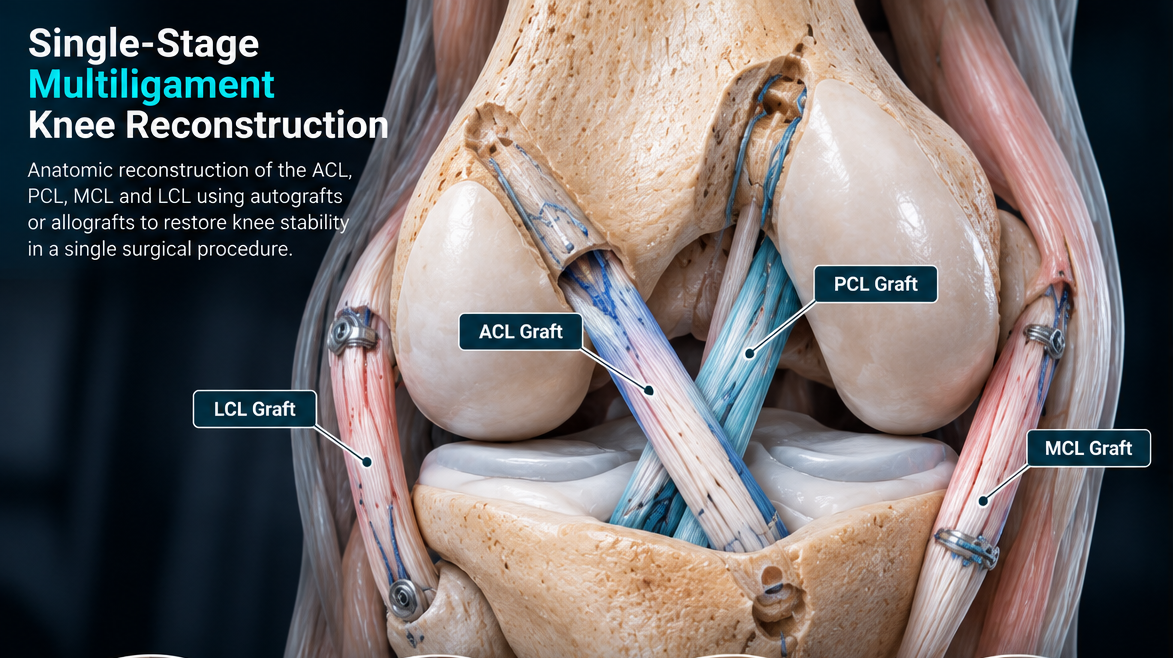 العلاج
4. Single-Stage Arthroscopic Reconstruction
Surgical treatment often involves single-stage multi-ligament reconstruction using advanced arthroscopic techniques and high-strength grafts to fully restore multi-planar joint stability
 إعادة التأهيل
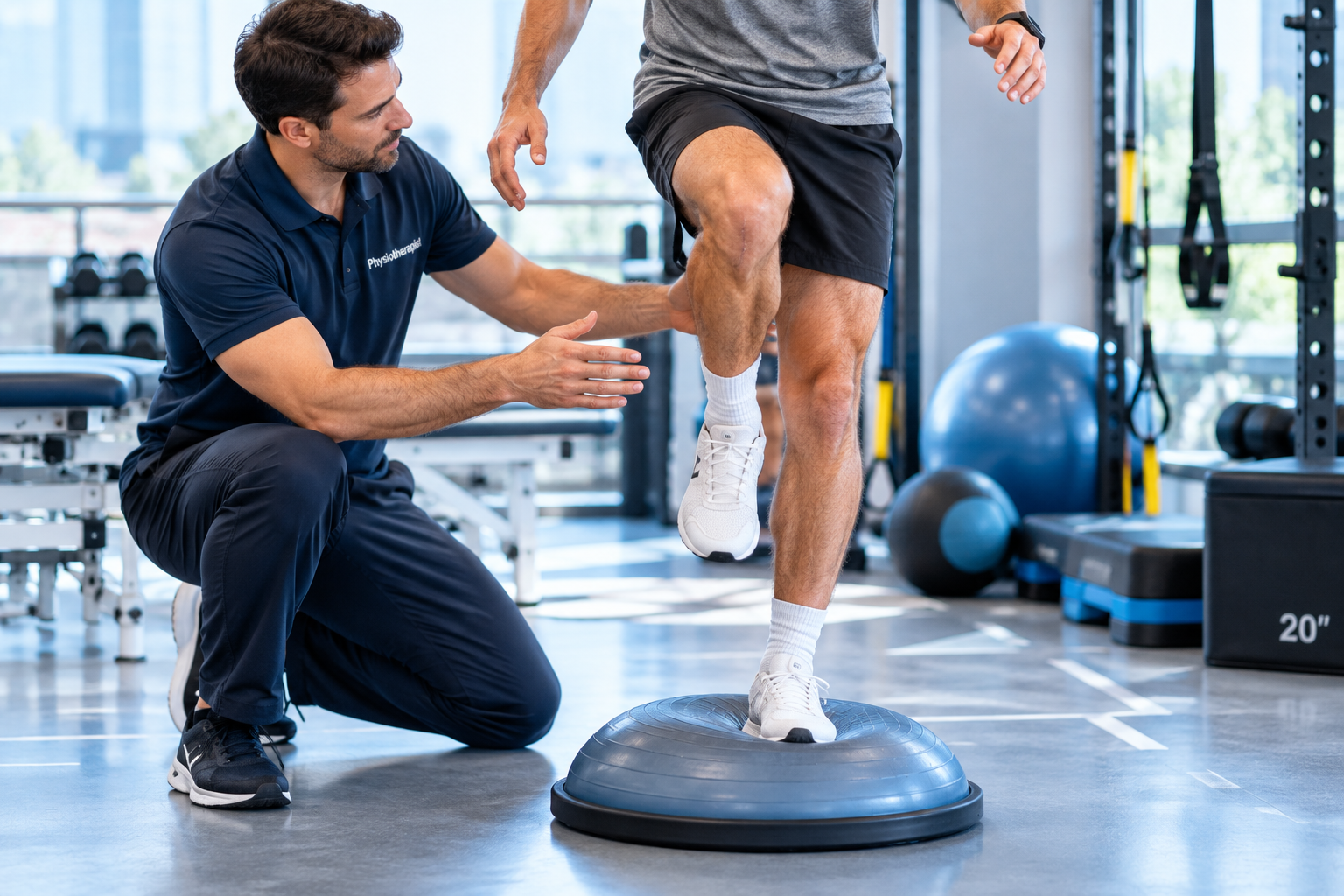
5. Structured Rehabilitation & Recovery
Recovery requires a phased, carefully monitored rehabilitation protocol. Controlled motion and progressive weight-bearing protect the repaired grafts while safely rebuilding strength.
Multiligament knee injuries are among the most complex surgical challenges in orthopaedics. Achieving a successful outcome requires precise diagnostic mapping, meticulous single-stage reconstruction, and a highly structured, patient-specific rehabilitation program.

الأسئلة الشائعة
Can a multiligament knee injury heal without surgery?
What is the recovery timeline for returning to sports or heavy activities?
How soon can I walk or bearing weight after multiligament reconstruction?
Is single-stage reconstruction safe for complex multiligament knee injuries?
ملاحظة: هذه المعلومات للتثقيف العام فقط ولا تغني عن استشارة طبيبك.
مراجع طبية دولية


حالات ذات صلة


احجز موعدًا
احجز موعد استشارتك اليوم.
راسلنا عبر واتساب
استجابة سريعة لاستفساراتكم.