

Cartilage Damage and Osteochondral Lesions
الغضروف المفصلي هو السطح الأملس المنزلق الذي يغطي أطراف عظام الركبة. وإذا تضرر فإنه لا يلتئم من تلقاء نفسه، لكن للجراحة الحديثة الكثير مما تقدمه.

- استشاري جراحة العظام حاصل على شهادة البورد الألماني
- جراح ركبة معتمد من DKG
- جراح تنظير مفاصل معتمد من AGA
- طبيب رياضي معتمد من GOTS
- دبلوم الفيفا في طب كرة القدم
- International Experience (Germany & GCC)
- رئيس سابق لقسم جراحة العظام (ألمانيا)
- أكثر من ١٤ عامًا من الخبرة
الغضروف المفصلي نسيج أبيض أملس كالزجاج يغطي أطراف العظام داخل الركبة. يتيح للمفصل الانزلاق بلا احتكاك تقريبًا ويوزّع الحمل على السطح. وخلافًا لمعظم الأنسجة، لا تصله تروية دموية، ولذلك لا يستطيع إصلاح نفسه بعد التضرر.
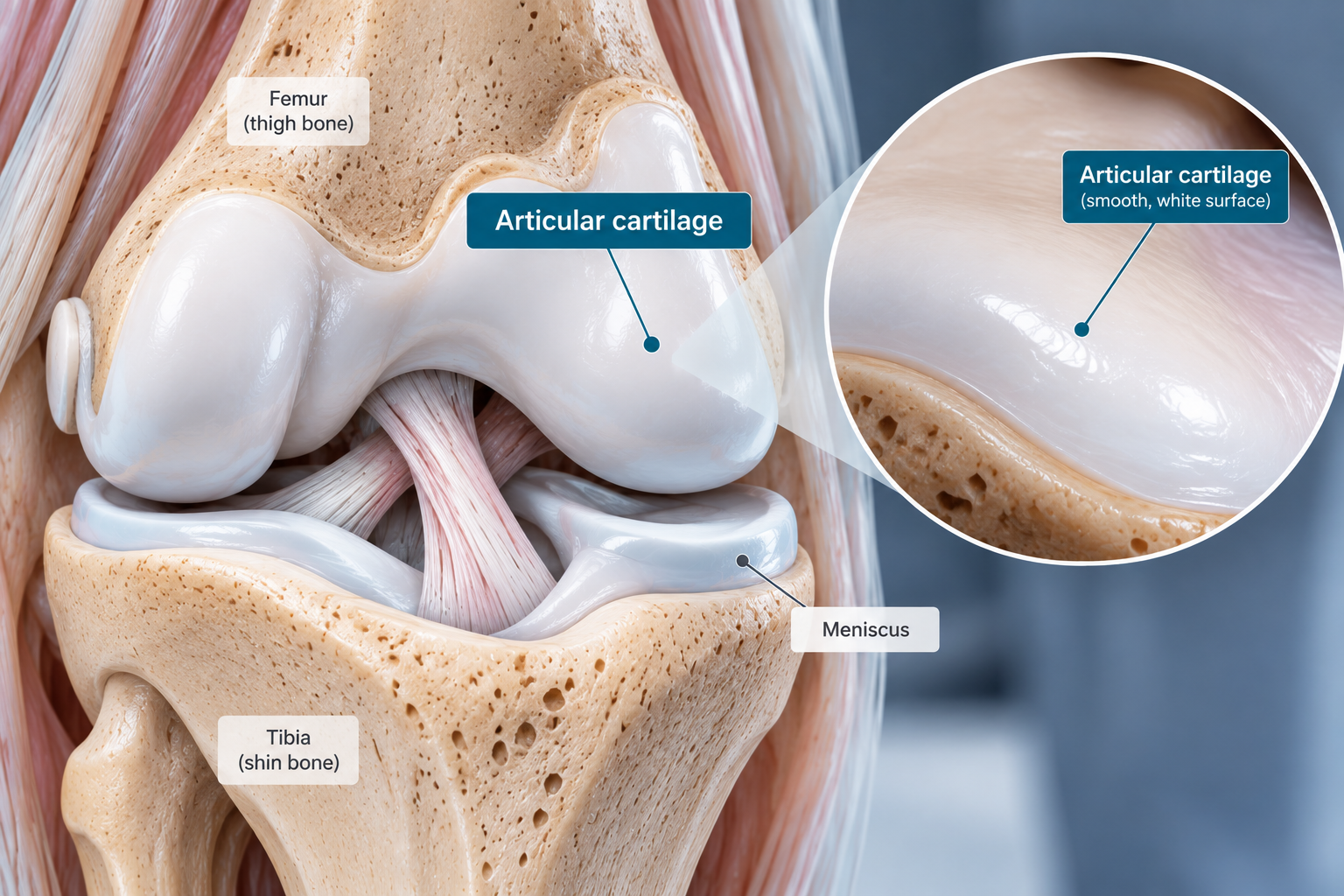 رسم تشريحي
١. التشريح ونظرة عامة
الغضروف المفصلي نسيج أبيض أملس كالزجاج يغطي أطراف العظام داخل الركبة.
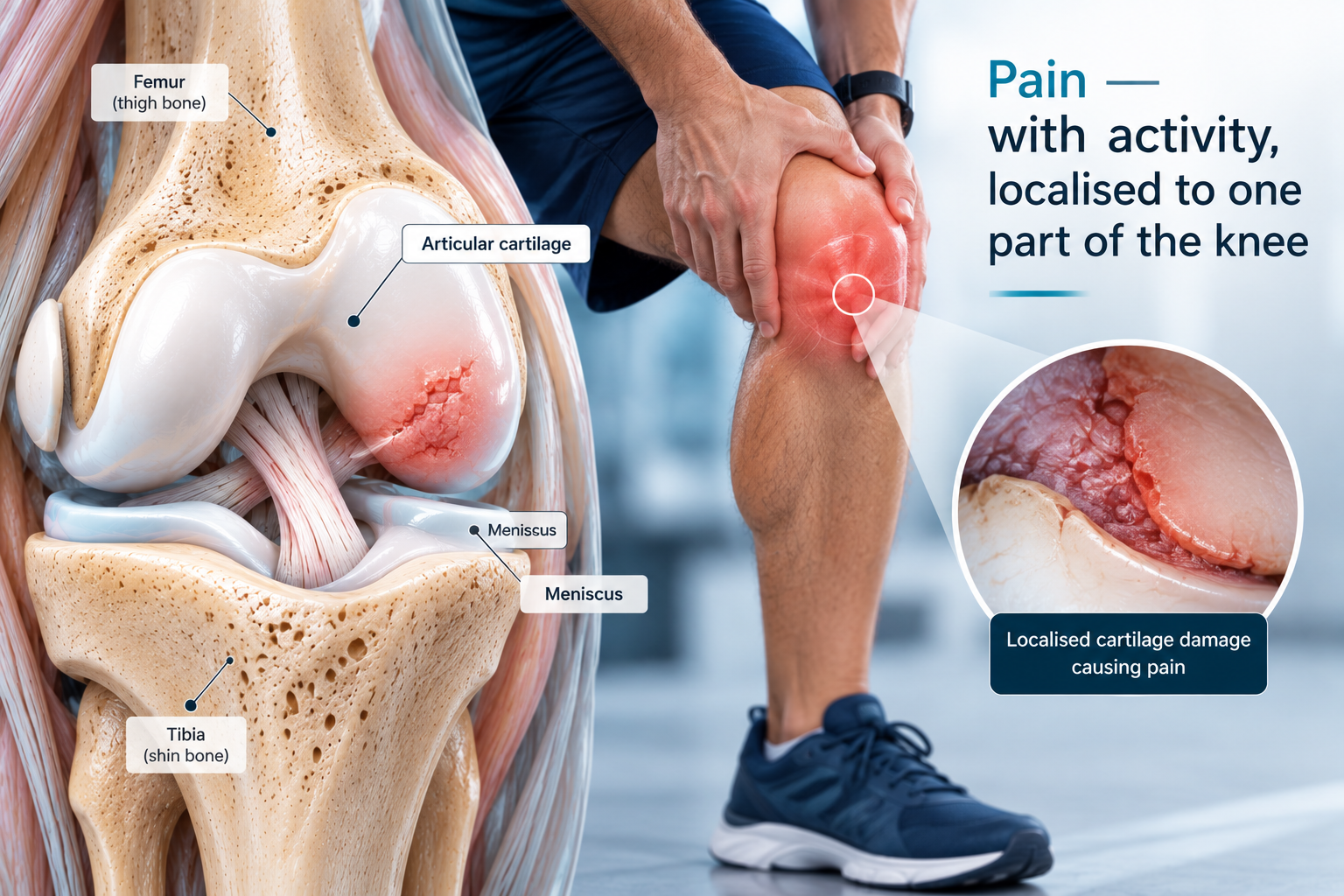 الفحص السريري
٢. العلامات والأعراض
ألم — مع النشاط، متركّز في جزء واحد من الركبة.
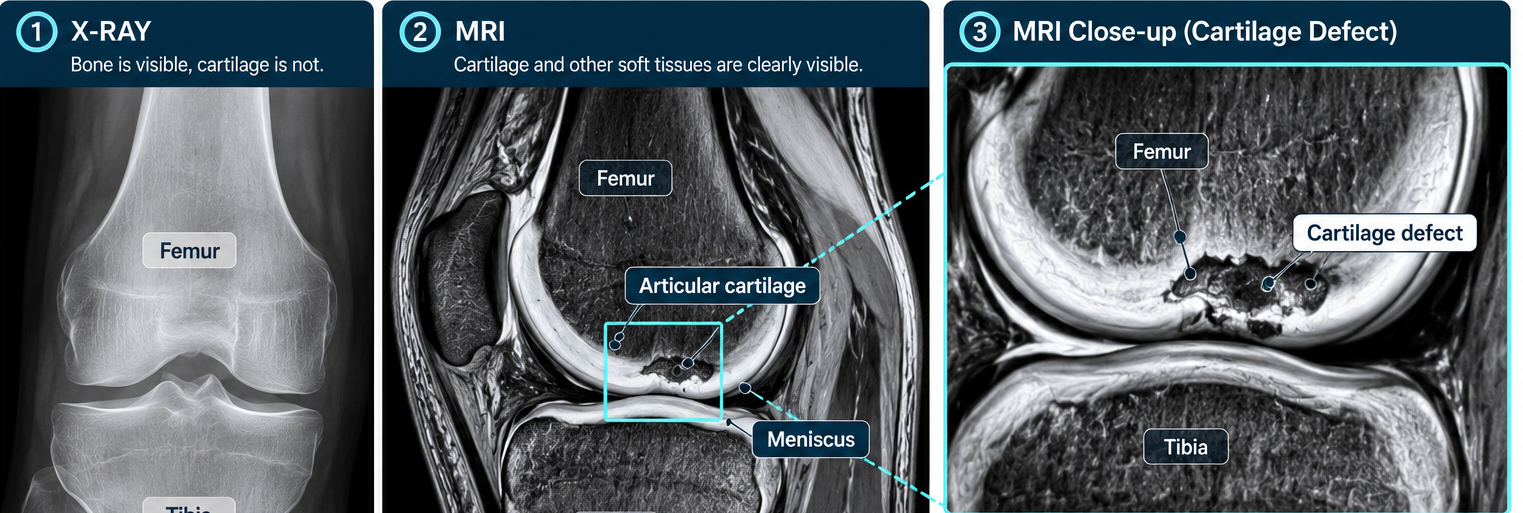 التصوير التشخيصي
٣. التشخيص والأشعة
لأن الغضروف لا يظهر على الأشعة العادية، يكون الرنين المغناطيسي محوريًا في التشخيص: فهو يحدد حجم العيب وعمقه وموضعه وحالة العظم تحته.
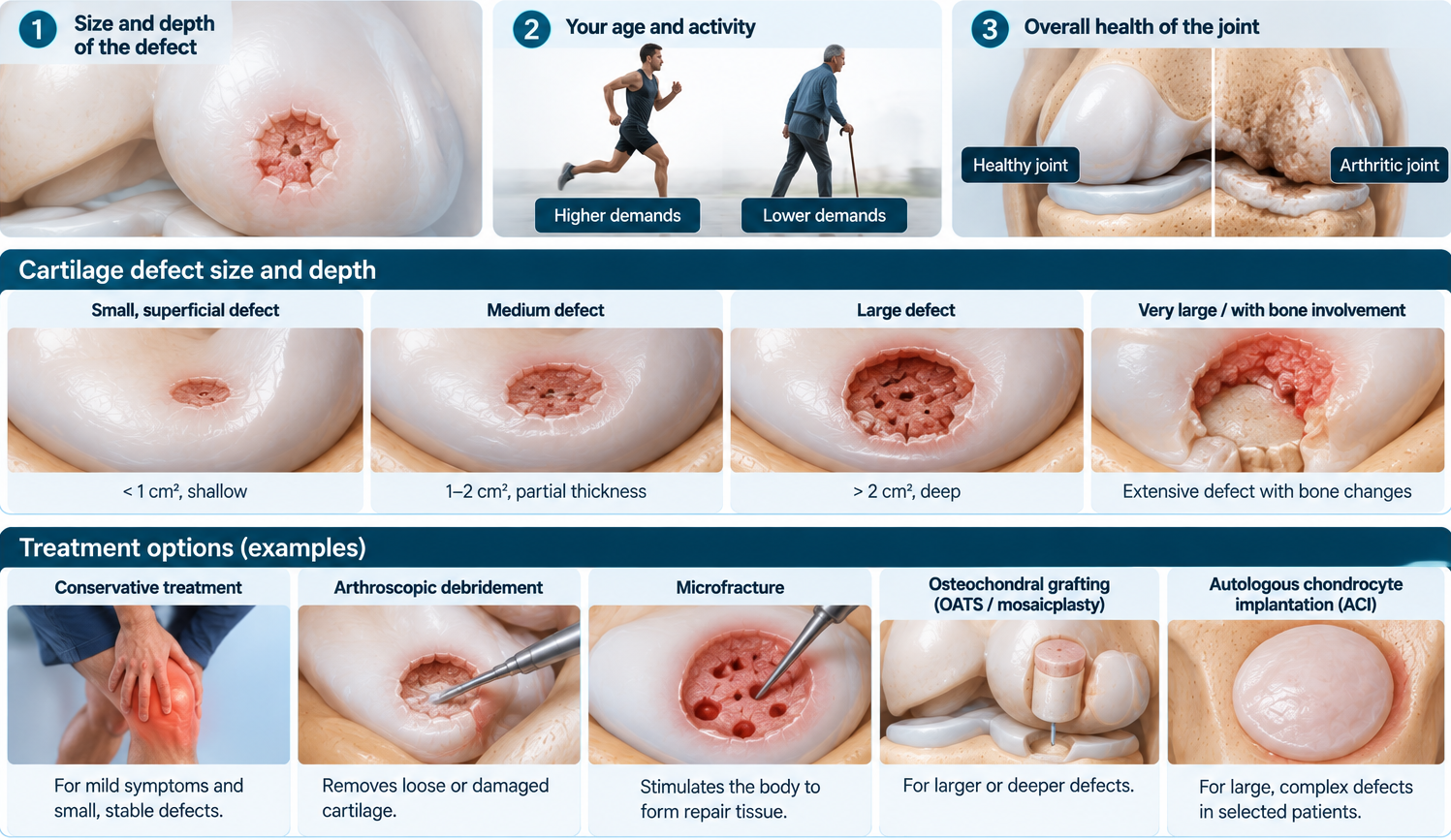 العلاج
٤. خيارات العلاج
تعتمد المقاربة على حجم العيب وعمقه، وعلى عمرك ومستوى نشاطك، وعلى الحالة العامة للمفصل.
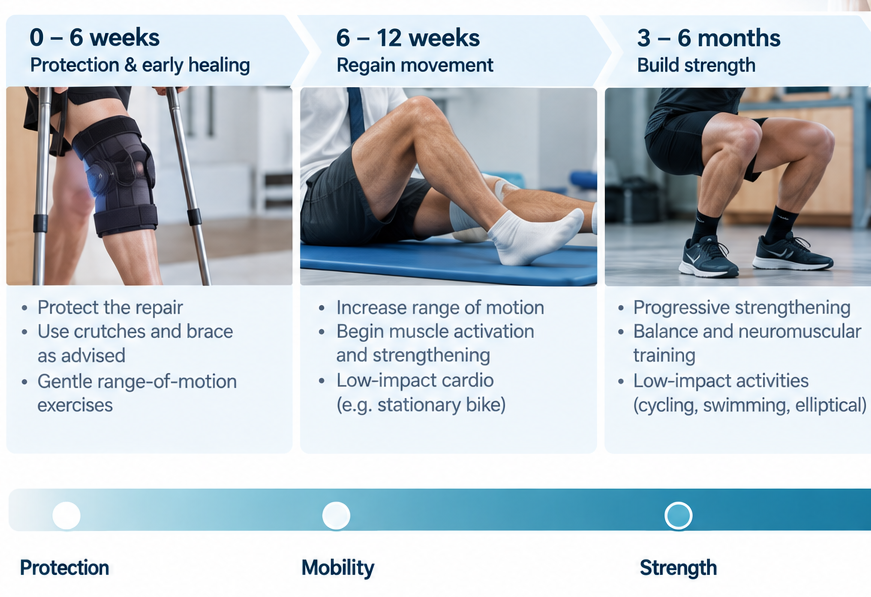 إعادة التأهيل
٥. التعافي وإعادة التأهيل
إجراءات الغضروف تتطلب صبرًا: فالنسيج الجديد يجب أن ينضج ويلتحم قبل تحميله، لذا يكون التعافي محميًا ومتدرجًا، عادةً عدة أشهر مع عودة مرحلية إلى الأنشطة ذات الأثر.
الغضروف المفصلي هو السطح الأملس المنزلق الذي يغطي أطراف عظام الركبة. وإذا تضرر فإنه لا يلتئم من تلقاء نفسه، لكن للجراحة الحديثة الكثير مما تقدمه.

الأسئلة الشائعة
Can articular cartilage damage heal on its own without intervention?
How long does protected weight-bearing last after cartilage repair surgery?
What surgical options are available to repair or regenerate knee cartilage?
When can patients return to sports and high-impact activities after cartilage surgery?
Can intra-articular injections (such as Hyaluronic Acid or PRP) repair damaged cartilage?
ملاحظة: هذه المعلومات للتثقيف العام فقط ولا تغني عن استشارة طبيبك.
مراجع طبية دولية


حالات ذات صلة


احجز موعدًا
احجز موعد استشارتك اليوم.
راسلنا عبر واتساب
استجابة سريعة لاستفساراتكم.