

Cartilage Damage and Osteochondral Lesions
Articular cartilage is the smooth, gliding surface that caps the bones in your knee. When it is damaged it does not heal on its own — but there is a great deal that modern surgery can do.

- German Board-Certified Orthopaedic Surgeon
- DKG Certified Knee Surgeon
- AGA Certified Arthroscopic Surgeon
- GOTS Certified Sports Physician
- FIFA Diploma in Football Medicine
- International Experience (Germany & GCC)
- Former Chief of Orthopaedic Surgery (Germany)
- 14+ Years of Experience
Articular cartilage is the glassy-smooth, white tissue covering the ends of the bones inside the knee. It lets the joint glide with almost no friction and spreads load across the surface. Unlike most tissues, it has no blood supply — so once damaged, it cannot repair itself.
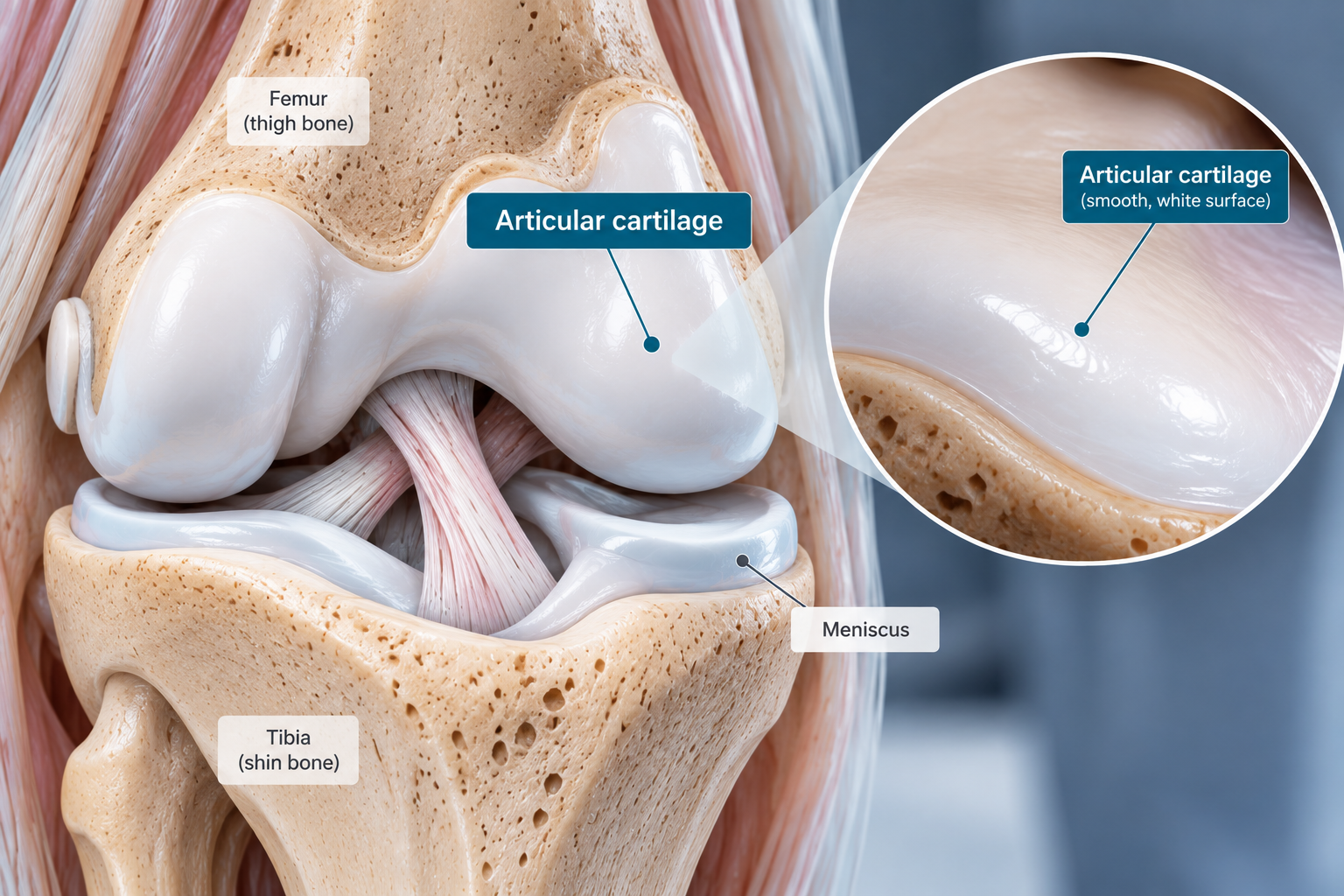 Anatomy diagram
1. Anatomy & Overview
Articular cartilage is the glassy-smooth, white tissue covering the ends of the bones inside the knee.
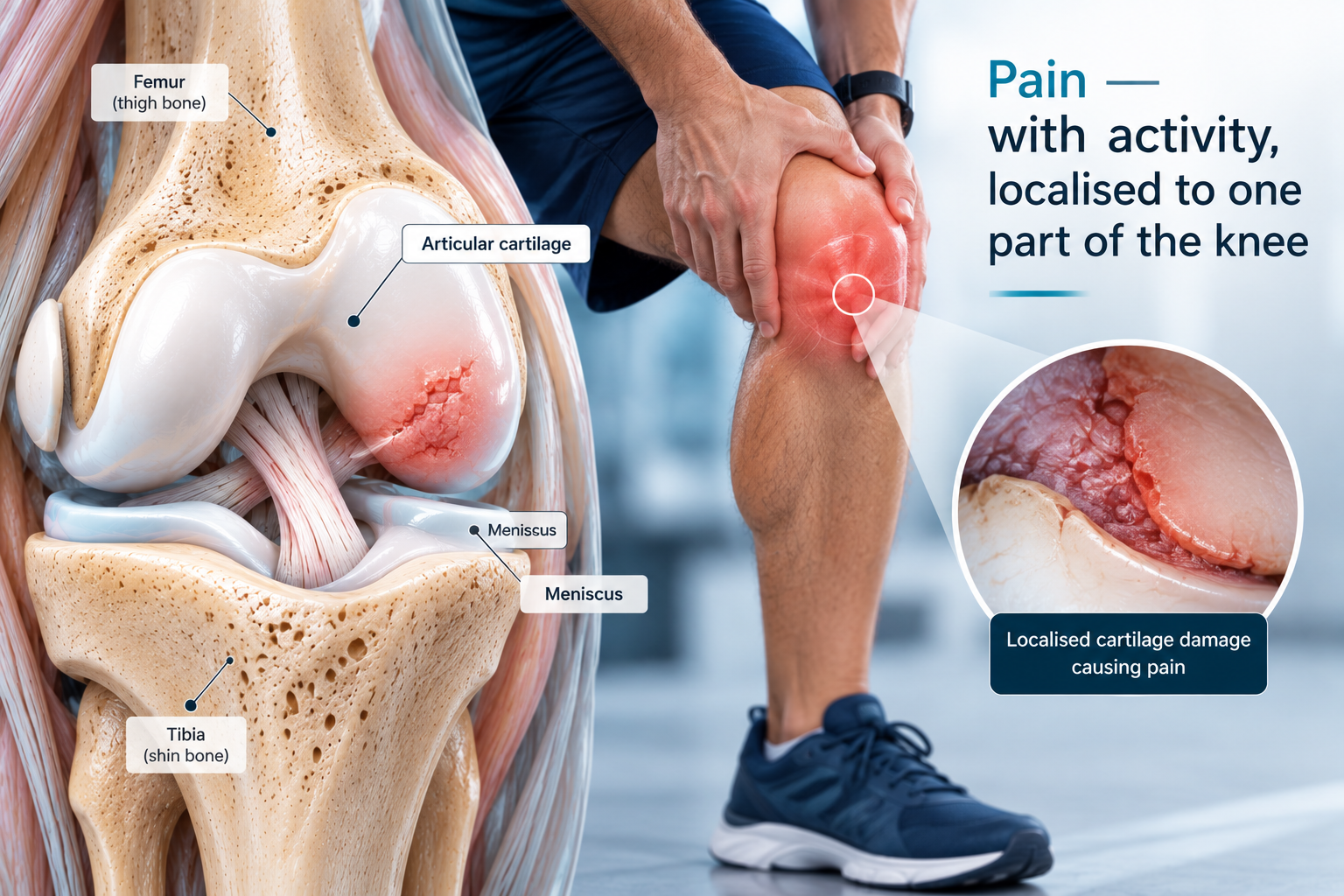 Clinical examination
2. Signs & Symptoms
Pain — with activity, localised to one part of the knee.
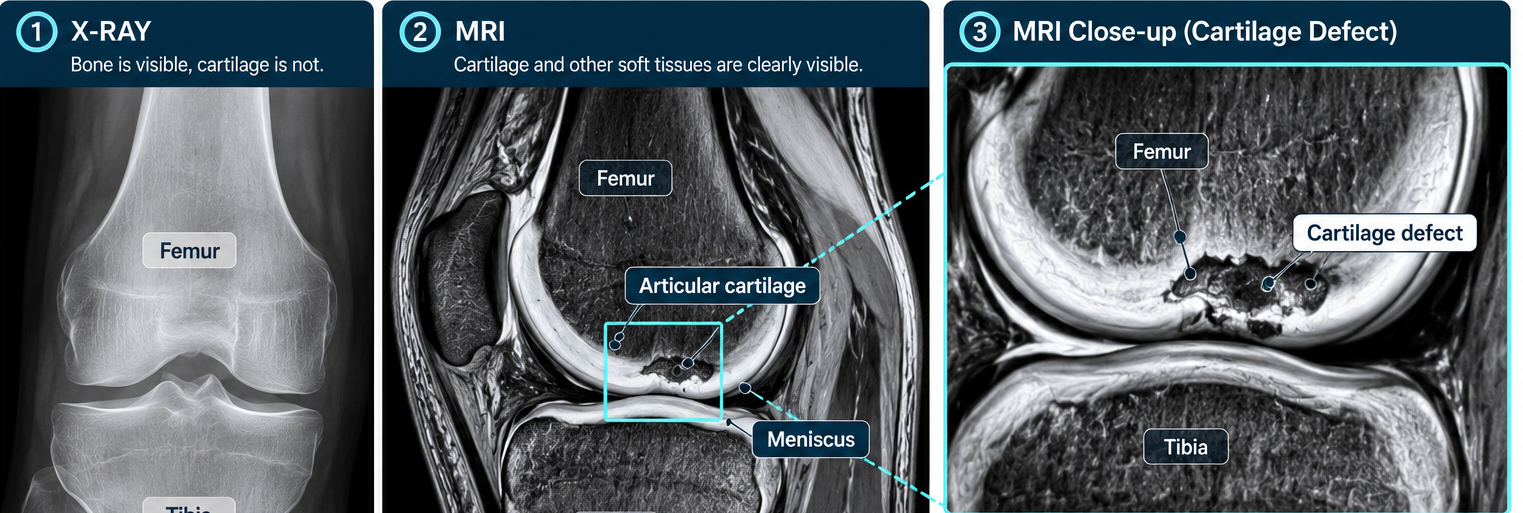 Diagnostic imaging
3. Diagnosis & Imaging
Because cartilage does not show on a plain X-ray, an MRI is central to diagnosis — it maps the size, depth and location of the defect and the state of the bone beneath.
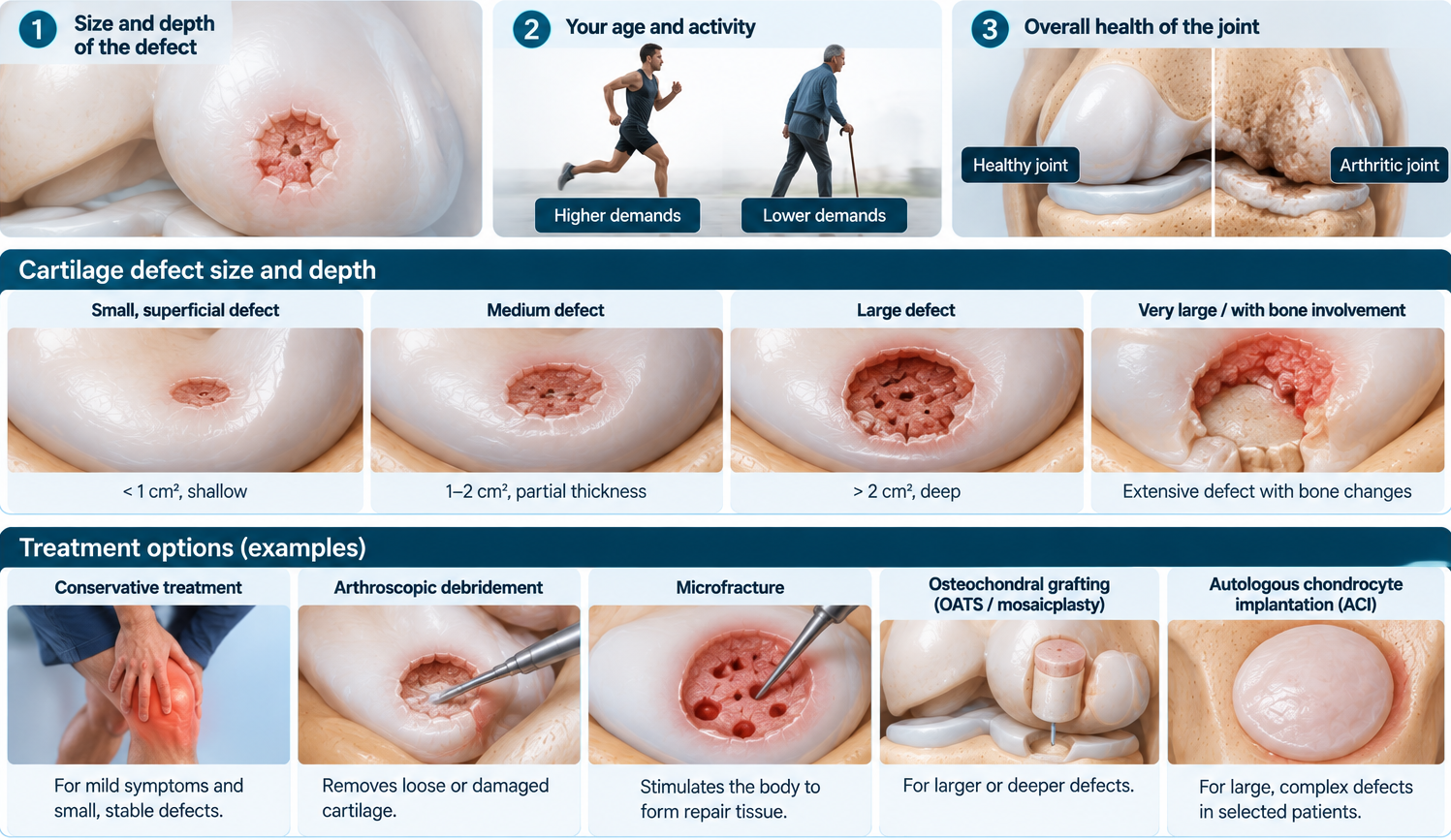 Treatment
4. Treatment Options
The approach depends on the size and depth of the defect, your age and activity, and the overall health of the joint.
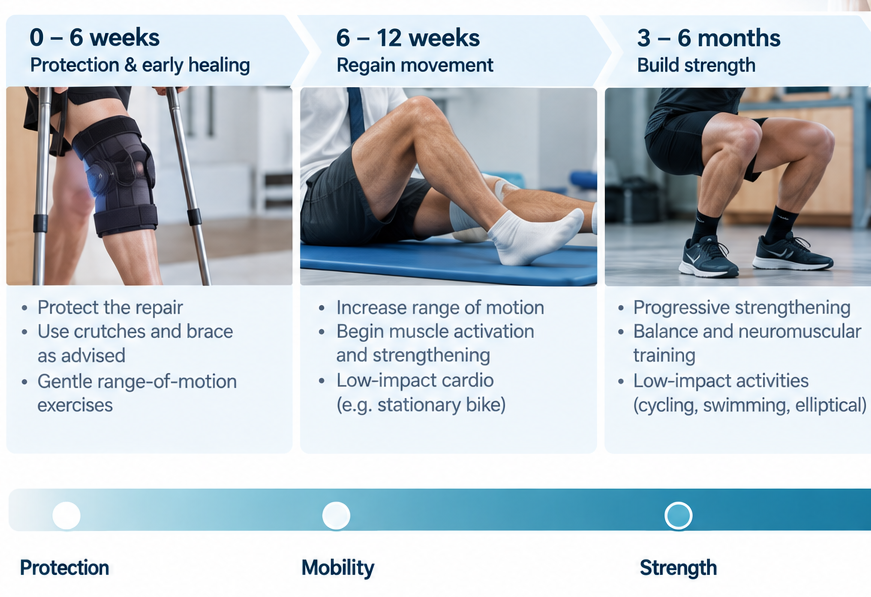 Rehabilitation
5. Recovery & Rehabilitation
Cartilage procedures demand patience: the new tissue must mature and bond before it is loaded, so recovery is protected and gradual — typically several months, with a staged return to impact.
Articular cartilage is the smooth, gliding surface that caps the bones in your knee. When it is damaged it does not heal on its own — but there is a great deal that modern surgery can do.

Frequently Asked Questions
Can articular cartilage damage heal on its own without intervention?
How long does protected weight-bearing last after cartilage repair surgery?
What surgical options are available to repair or regenerate knee cartilage?
When can patients return to sports and high-impact activities after cartilage surgery?
Can intra-articular injections (such as Hyaluronic Acid or PRP) repair damaged cartilage?
Note: This information is for general education only and should not replace a consultation with your doctor.
International Medical References
 American Academy of Orthopaedic Surgeonsaaos.org
 European Society of Sports Traumatology, Knee Surgery & Arthroscopyesska.org
 American Orthopaedic Society for Sports Medicinesportsmed.org
 Deutsche Kniegesellschaft (German Knee Society)dkg-online.de
 Society for Arthroscopy and Joint Surgeryaga-online.ch
Related Conditions


Book an Appointment
Secure your consultation today.
WhatsApp Us
Quick response for your enquiries.