

SLAP & Labral Tears
The labrum is a specialized ring of fibrous cartilage that deepens the shallow shoulder socket and secures its stabilizing ligaments. Labral tears—whether superior (SLAP), anterior (Bankart), or posterior—can lead to persistent joint instability, catching, and deep shoulder pain. Modern minimally invasive arthroscopic techniques effectively repair or reconstruct the labrum to restore complete joint stability.

- German Board-Certified Orthopaedic Surgeon
- DKG Certified Knee Surgeon
- AGA Certified Arthroscopic Surgeon
- GOTS Certified Sports Physician
- FIFA Diploma in Football Medicine
- International Experience (Germany & GCC)
- Former Chief of Orthopaedic Surgery (Germany)
- 14+ Years of Experience
The shoulder joint offers exceptional mobility at the cost of inherent stability, making the labrum critical for keeping the humeral head centered within the socket. Tears often result from traumatic dislocations, repetitive overhead strain, or progressive degeneration. Treatment is individually tailored based on tear location, severity, and patient activity goals.
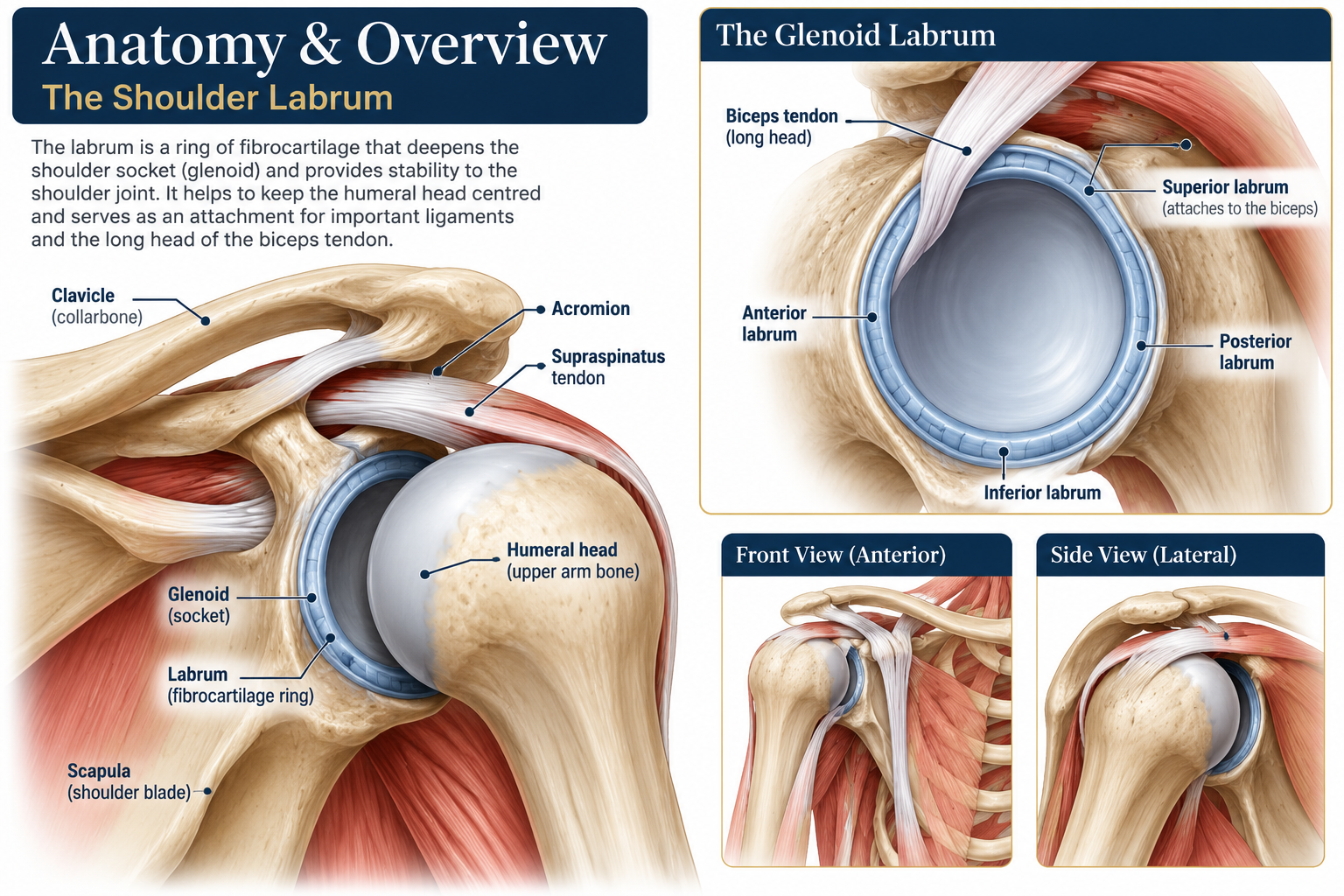 Anatomy diagram
1. Anatomy & Overview: The Shoulder Cartilage Ring
The labrum borders the glenoid socket, serving as an anchor for shoulder ligaments and the biceps tendon anchor.
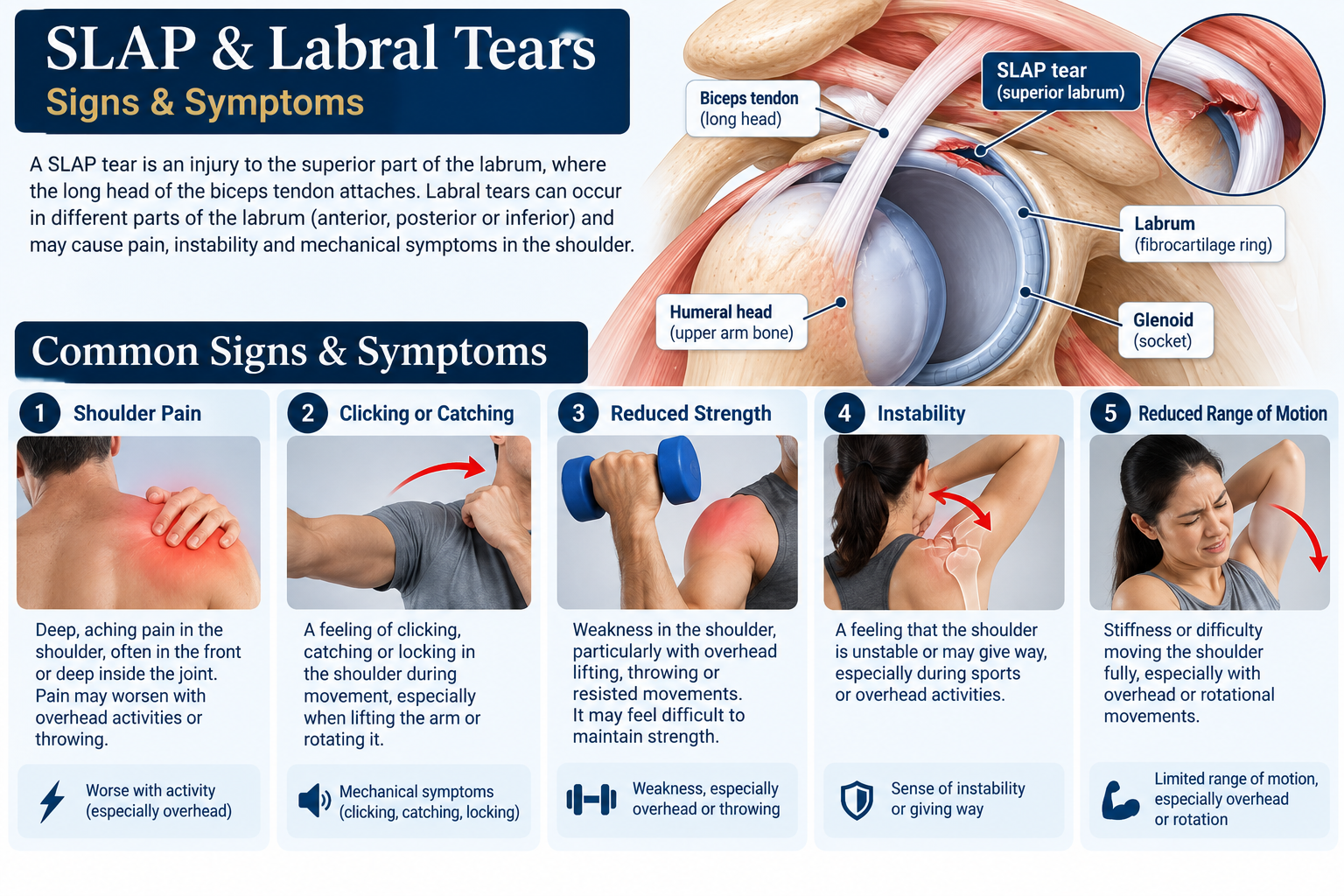 Clinical examination
2. Signs & Symptoms: Instability & Deep Mechanical Pain
Patients often experience a feeling of the shoulder “slipping out” or popping, along with deep joint pain and painful clicking during motion.
 Diagnostic imaging
3. Diagnosis & Imaging: Targeted Exams & Contrast MRI (MRA)
Specialized stability tests combined with high-resolution MR Arthrogram (MRA) provide precise mapping of the tear’s location and extent.
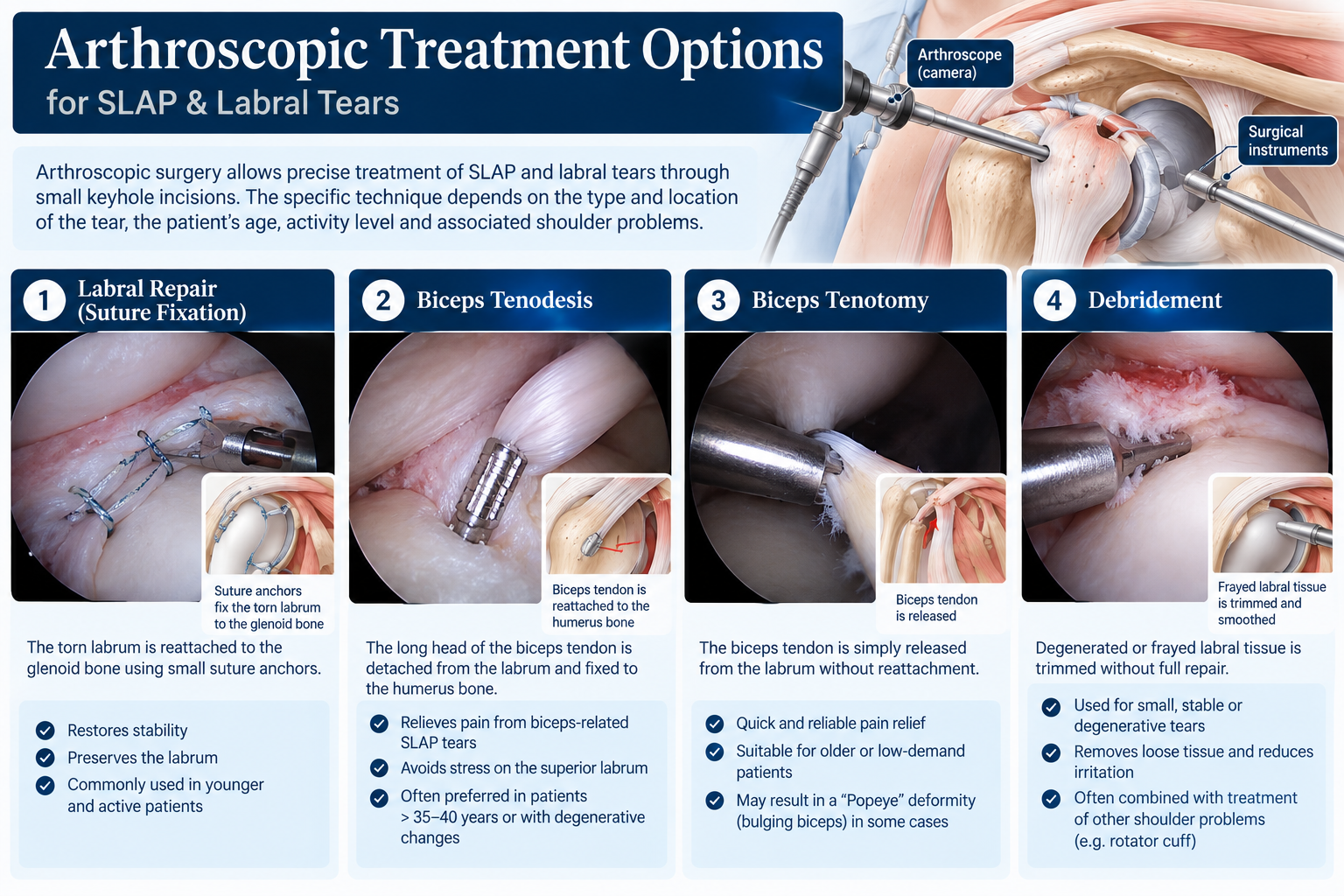
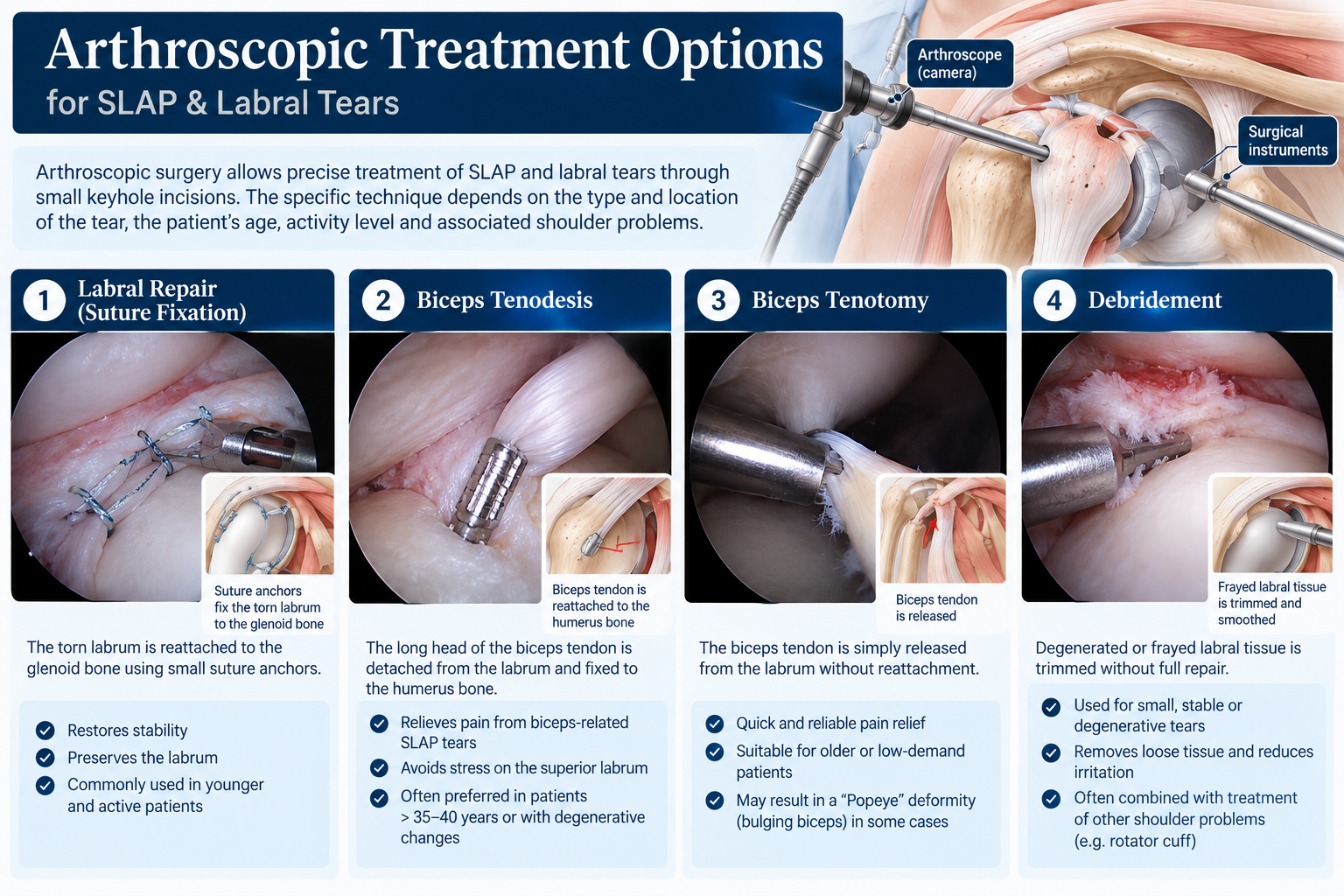 Treatment
4. Treatment Options: Targeted Physical Therapy & Arthroscopic Repair
Conservative rehabilitation aims to strengthen dynamic stabilizers. Persistent instability or structural tears are managed with precise arthroscopic labral anchors.
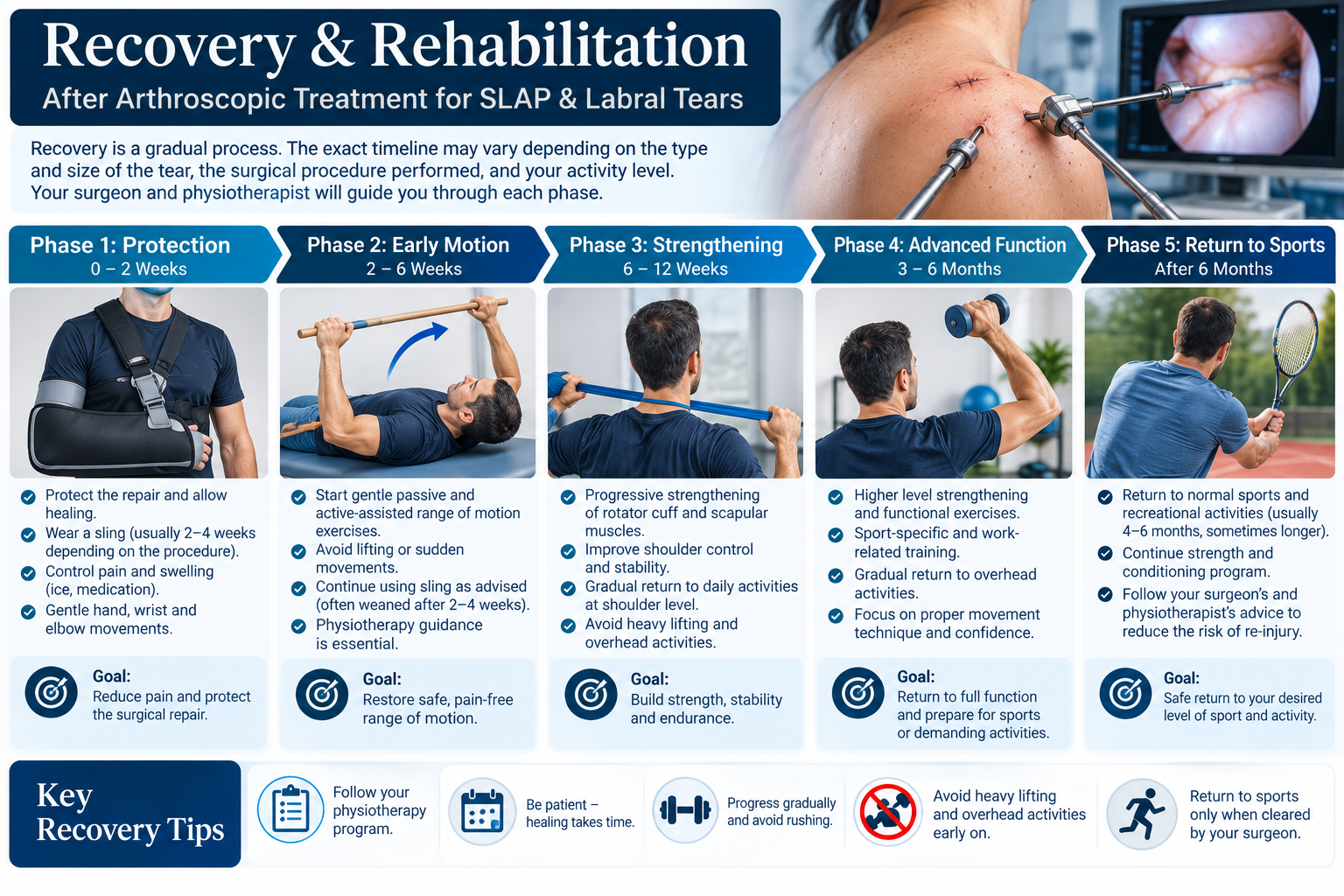 Rehabilitation
5. Recovery & Rehabilitation: Phased Physical Therapy & Return to Sports
Post-operative care includes temporary sling protection followed by structured physical therapy to rebuild strength, range of motion, and functional performance.
“A healthy labrum is essential for shoulder stability. Whether dealing with a traumatic dislocation tear or chronic overhead wear, accurate diagnosis guides our approach—aiming first to restore control, and when surgery is needed, utilizing advanced arthroscopic techniques to anchor the joint securely.”

Frequently Asked Questions
What is the difference between a SLAP tear and a Bankart lesion?
What is the recovery timeline after arthroscopic labral repair?
Can a labral tear heal on its own without surgery?
How is Labral Tears treated?
How do I know if my shoulder instability requires labral surgery?
Note: This information is for general education only and should not replace a consultation with your doctor.
International Medical References




Related Conditions


Book an Appointment
Secure your consultation today.
WhatsApp Us
Quick response for your enquiries.