

Shoulder Instability & Dislocation
The shoulder is the body’s most mobile joint — and that mobility comes at the cost of stability. When it slips or fully dislocates, it can become a recurring problem.

- German Board-Certified Orthopaedic Surgeon
- DKG Certified Knee Surgeon
- AGA Certified Arthroscopic Surgeon
- GOTS Certified Sports Physician
- FIFA Diploma in Football Medicine
- International Experience (Germany & GCC)
- Former Chief of Orthopaedic Surgery (Germany)
- 14+ Years of Experience
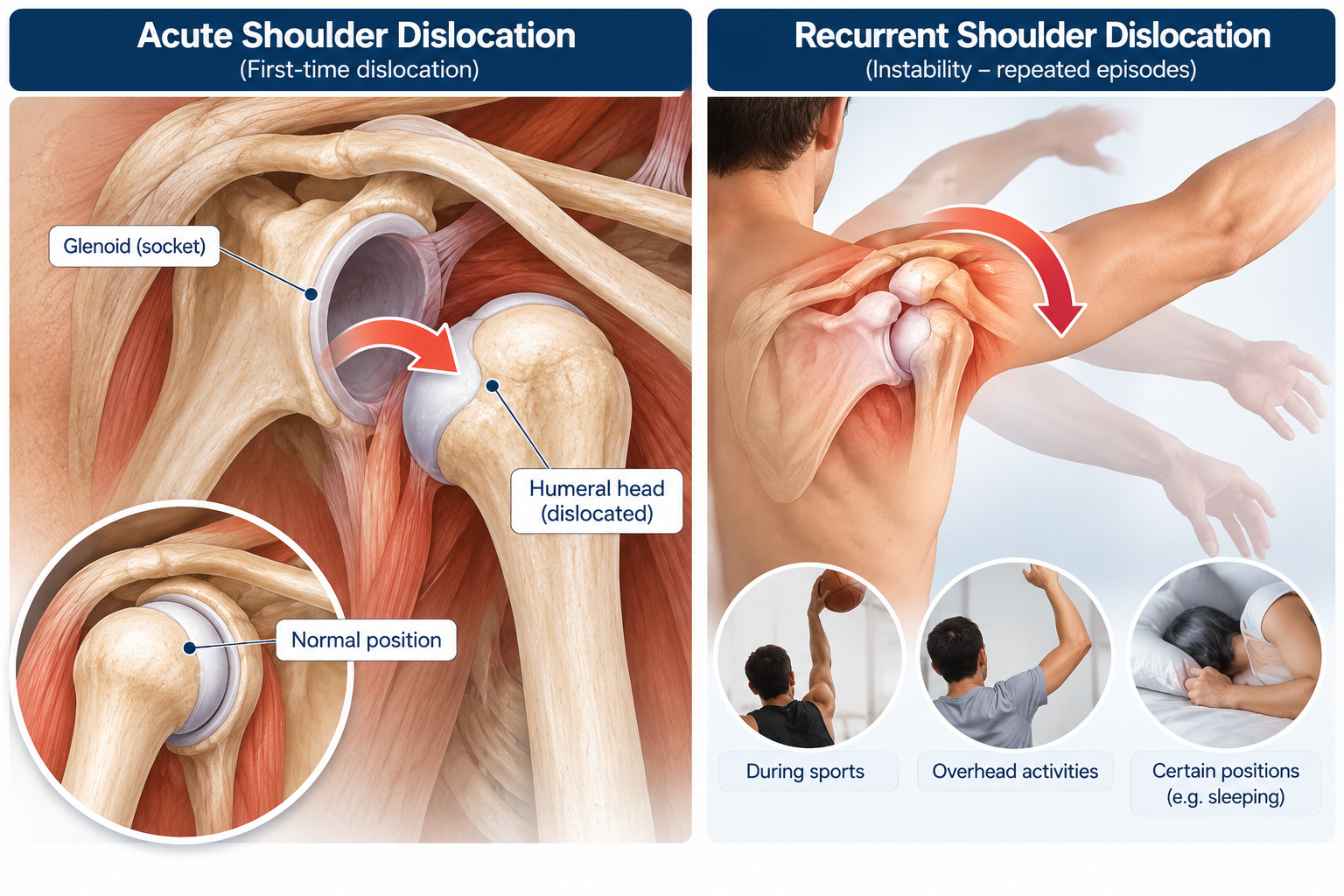
The shoulder is a ball-and-socket joint, but the socket is shallow — like a golf ball resting on a tee. A rim of cartilage (the labrum) and the surrounding ligaments deepen the socket and hold the ball in place.
1. Anatomy & Overview
The shoulder is a ball-and-socket joint, but the socket is shallow — like a golf ball resting on a tee.
 Clinical examination
1. Signs & Symptoms
A sense the shoulder may “pop out” — in certain positions, especially overhead.
3. Diagnosis & Imaging
Specific apprehension and relocation tests reproduce the feeling of instability and localise the direction.
 Treatment
2. Treatment Options
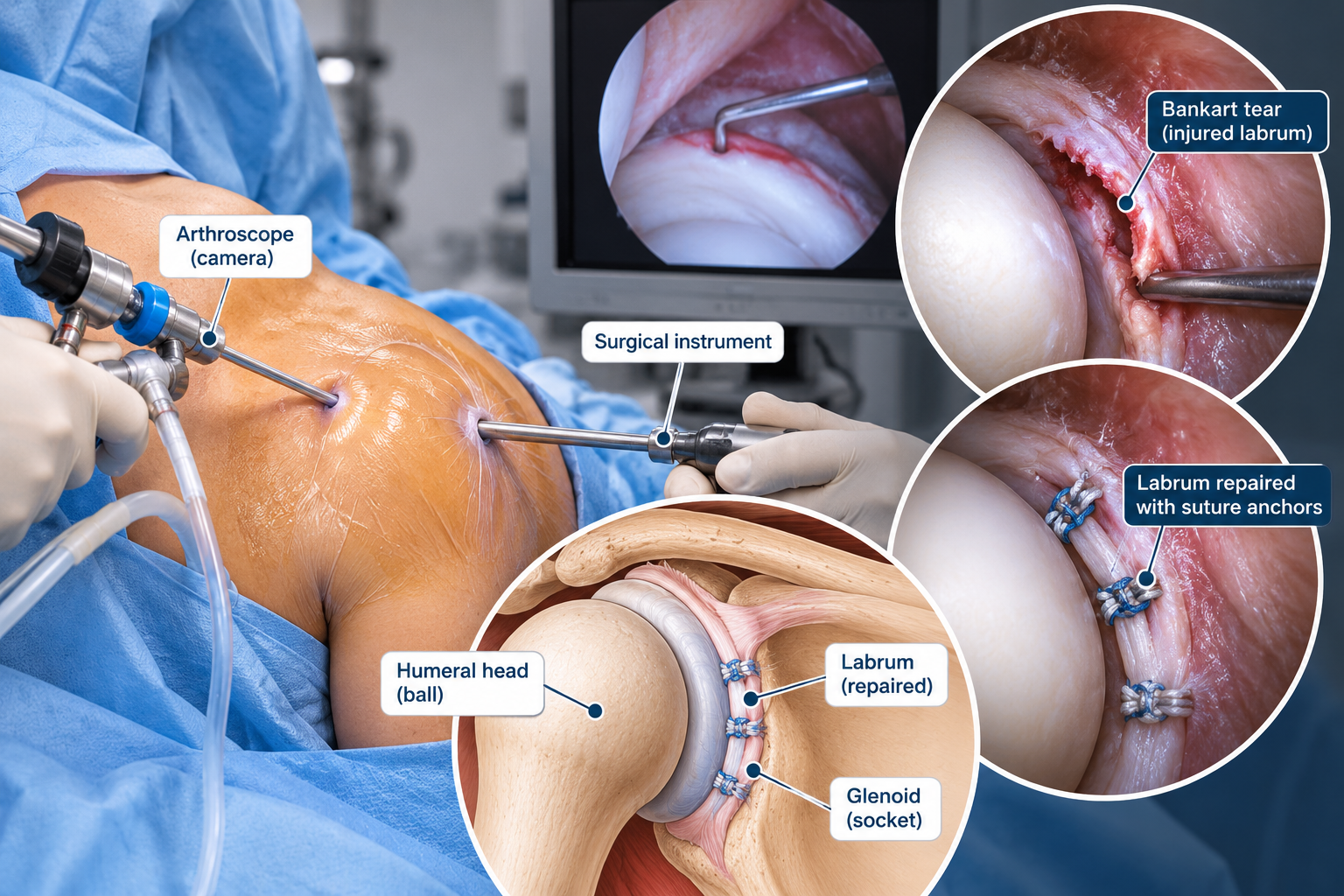
Recurrent dislocations or labral tears are restored using arthroscopic Bankart repair to reattach the ligaments, re-establish joint stability, and prevent future dislocations.
 Rehabilitation
3. Recovery & Rehabilitation
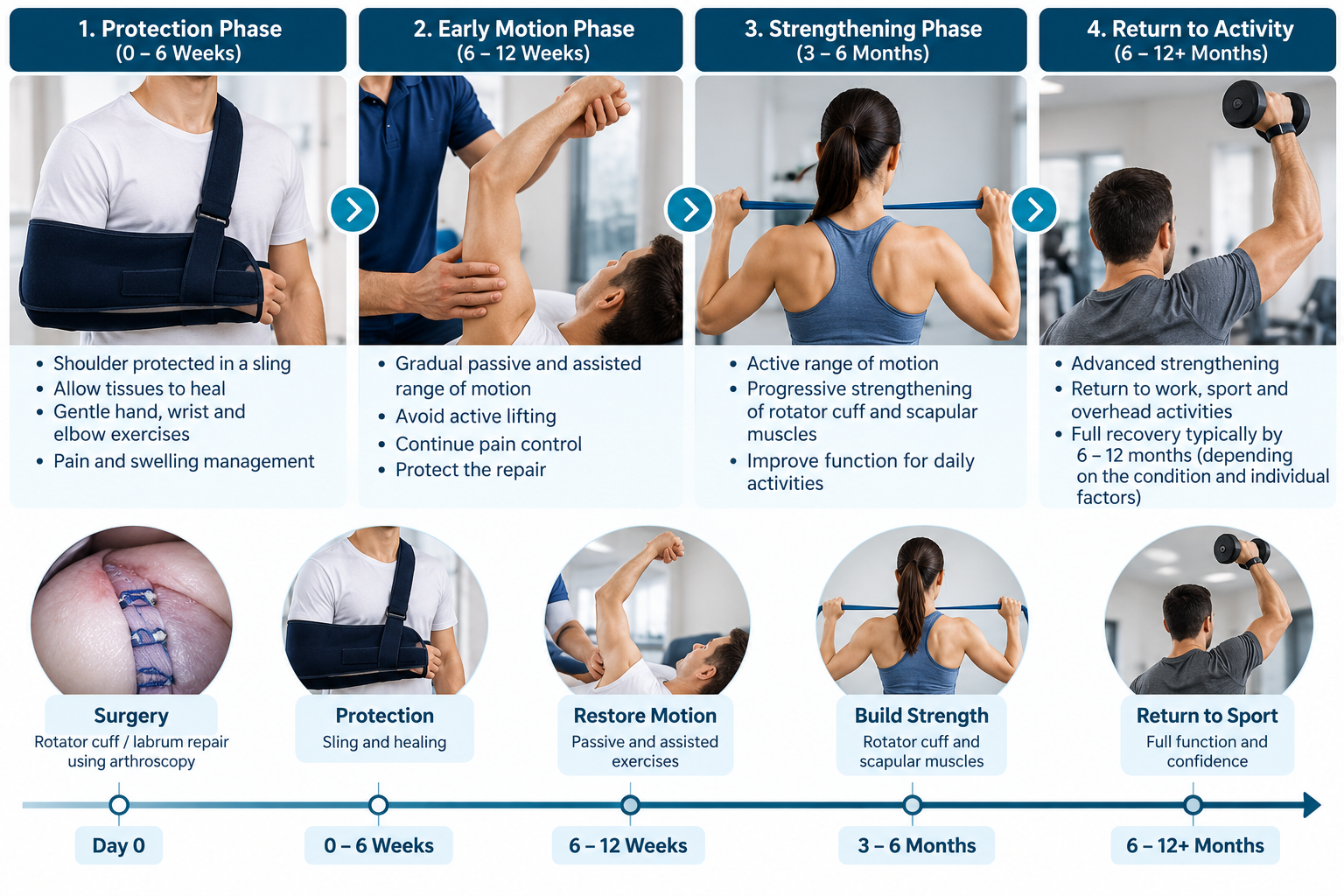
After stabilisation surgery the arm is supported in a sling, followed by a progressive programme that restores motion, then strength, then sport-specific control.
Each dislocation can cause a little more damage. In a young athlete, stabilising the shoulder early often protects the joint for the long term.

Frequently Asked Questions
Does a first-time shoulder dislocation always require surgery, or can it be managed with physical therapy?
What is the success rate of shoulder stabilization surgery, and can dislocation recur?
Why does my shoulder keep popping out during sleep or minimal everyday movements?
When can I return to heavy weightlifting, collision sports, or martial arts after surgery?
What is the difference between arthroscopic Bankart repair and the Latarjet procedure?
Note: This information is for general education only and should not replace a consultation with your doctor.
International Medical References




Related Conditions


Book an Appointment
Secure your consultation today.
WhatsApp Us
Quick response for your enquiries.