

Rotator Cuff Tear
The rotator cuff is the group of muscles and tendons that lift and rotate your arm. Tears are common with age and overuse — and respond well to the right plan.

- German Board-Certified Orthopaedic Surgeon
- DKG Certified Knee Surgeon
- AGA Certified Arthroscopic Surgeon
- GOTS Certified Sports Physician
- FIFA Diploma in Football Medicine
- International Experience (Germany & GCC)
- Former Chief of Orthopaedic Surgery (Germany)
- 14+ Years of Experience
The rotator cuff is a group of four muscles and their tendons that wrap around the top of the arm bone, holding it in the shoulder socket and powering lifting and rotation.
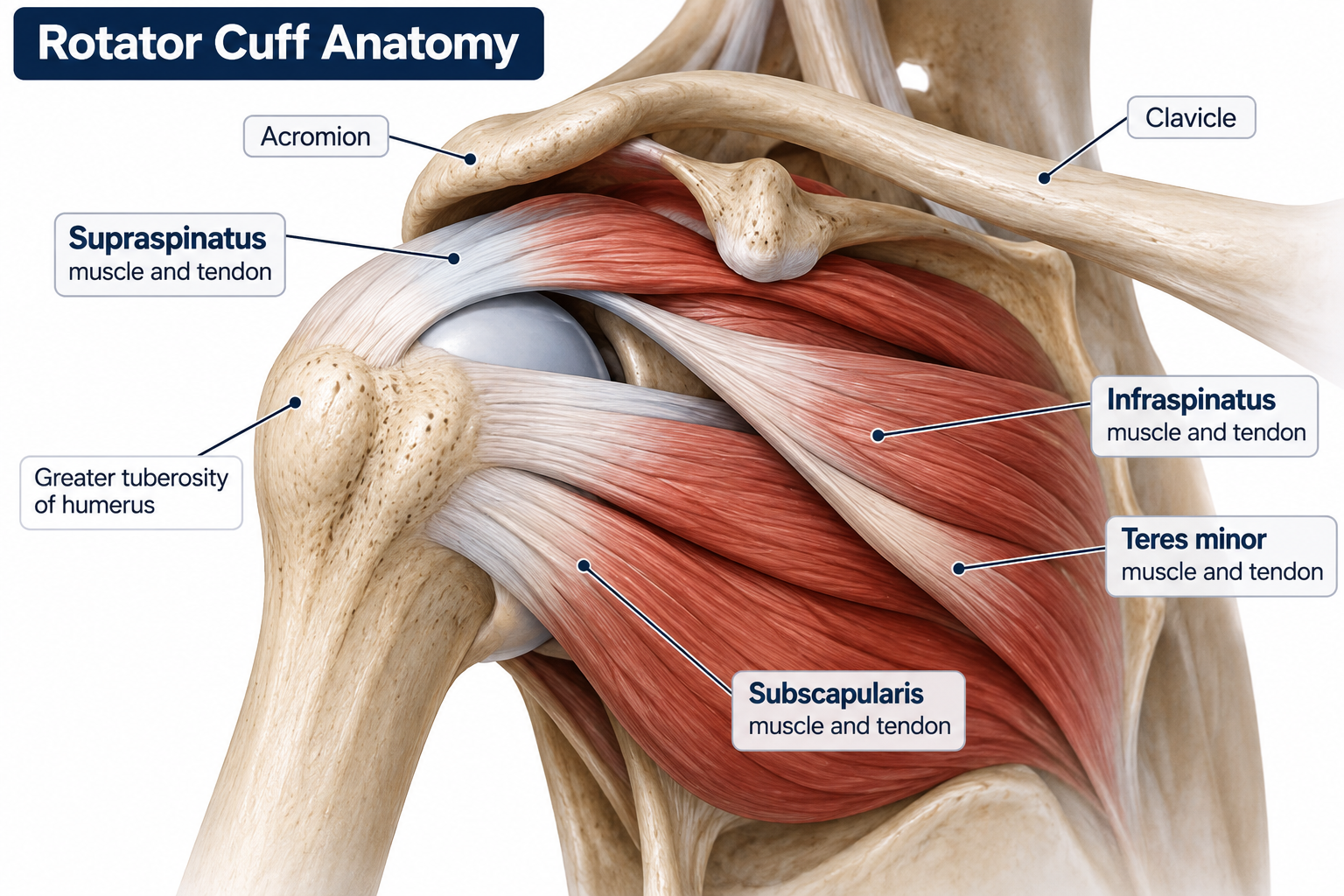 Anatomy diagram
1. Anatomy & Overview
The rotator cuff is a group of four muscles and their tendons that wrap around the top of the arm bone, holding it in the shoulder socket and powering lifting and rotation.
2. Signs & Symptoms
Pain — on the outer shoulder, often worse at night and when lying on that side.
3. Diagnosis & Imaging
Examination tests the strength and range of each cuff muscle to localise the problem.
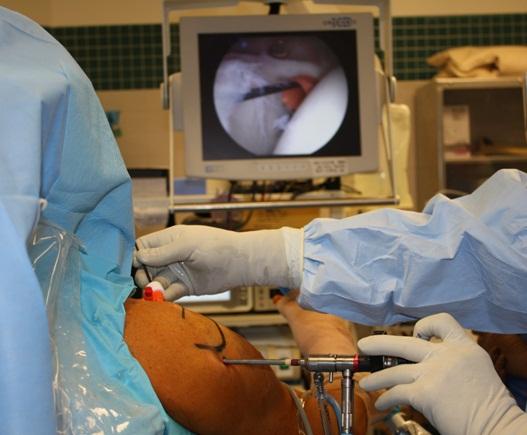 Treatment
2. Treatment Options
Structural tears—especially in active patients—often require arthroscopic repair to fix the tendon to the bone, relieve persistent pain, and prevent long-term joint damage.
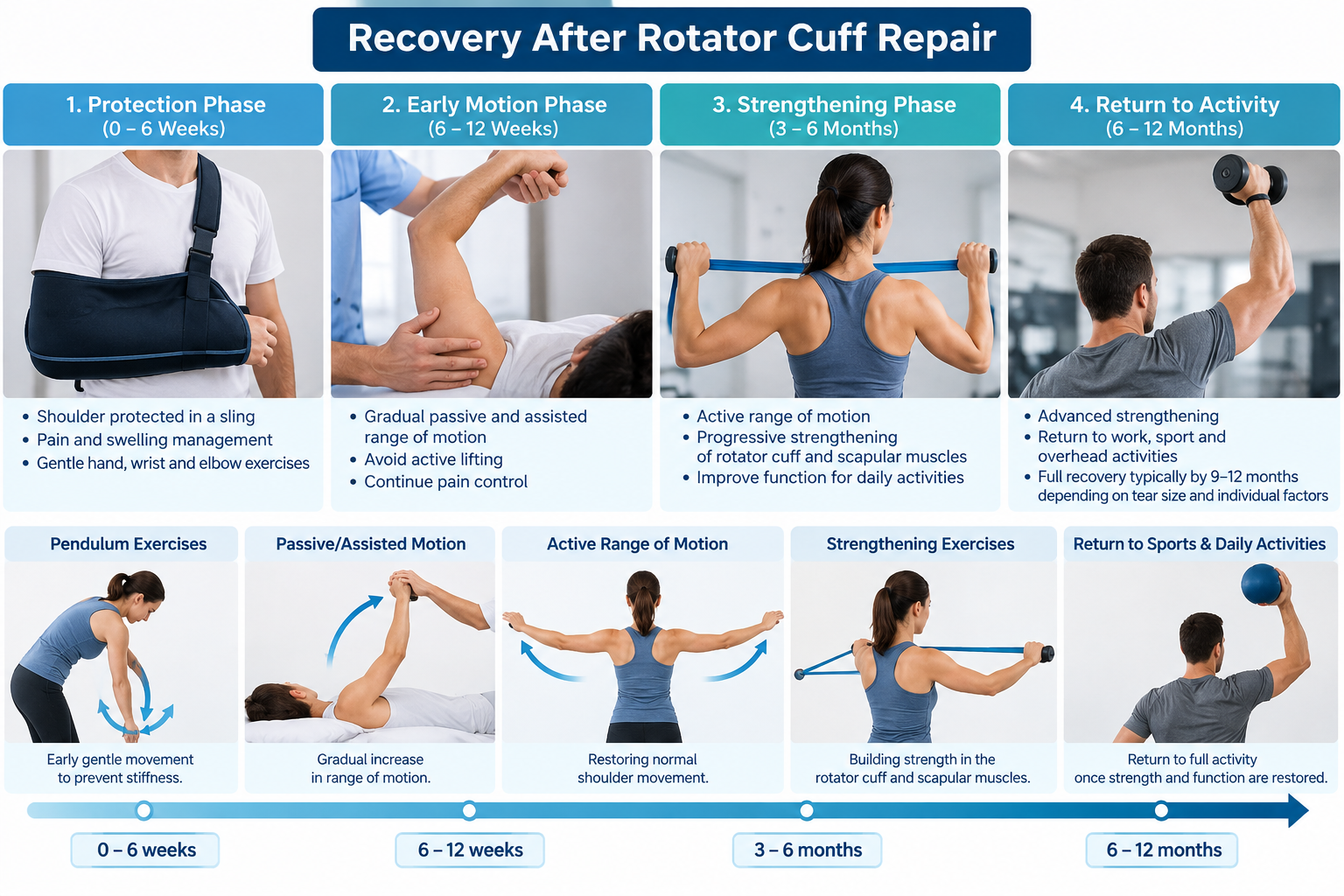 Rehabilitation
3. Recovery & Rehabilitation
After a repair, the shoulder is protected in a sling while the tendon heals to the bone — this early protection is essential.
The rotator cuff is the group of muscles and tendons that lift and rotate your arm. Tears are common with age and overuse — and respond well to the right plan.

Frequently Asked Questions
Why does rotator cuff pain worsen at night, and how can I sleep comfortably?
When is arthroscopic shoulder surgery necessary for a rotator cuff tear?
Can a rotator cuff tear heal without surgery?
How long is the recovery time after rotator cuff repair surgery?
Do cortisone or PRP injections treat or repair a rotator cuff tear?
Note: This information is for general education only and should not replace a consultation with your doctor.
International Medical References




Related Conditions


Book an Appointment
Secure your consultation today.
WhatsApp Us
Quick response for your enquiries.