

Recuurent Patellar Instability and Dislocation
When the kneecap slips out of its groove — partly or completely — it can be alarming and tends to recur. Understanding why it happens points the way to the right treatment.

- German Board-Certified Orthopaedic Surgeon
- DKG Certified Knee Surgeon
- AGA Certified Arthroscopic Surgeon
- GOTS Certified Sports Physician
- FIFA Diploma in Football Medicine
- International Experience (Germany & GCC)
- Former Chief of Orthopaedic Surgery (Germany)
- 14+ Years of Experience
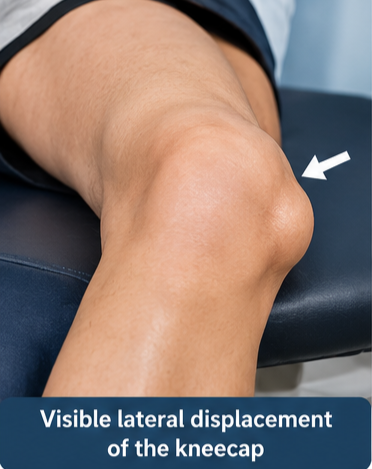
The kneecap normally glides up and down a groove (the trochlea) at the front of the thigh bone. In patellar instability, it slides out of that groove — usually towards the outer side — either partially (a subluxation) or completely (a dislocation).
 Treatment
1. Signs & Symptoms
The kneecap visibly shifting — to the side, then often snapping back.
 Rehabilitation
2. Treatment Options
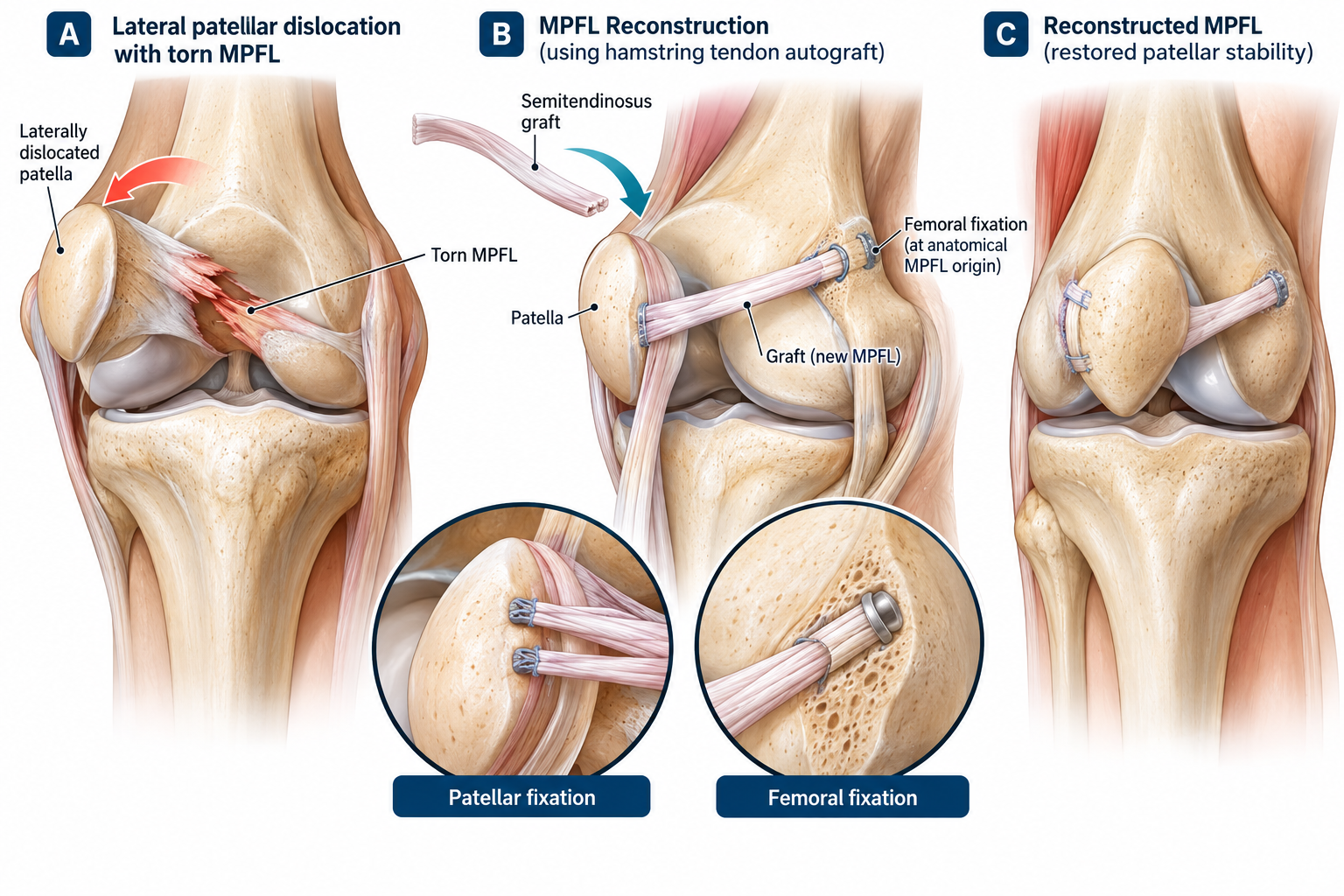
reatment depends on the severity of instability. Many patients improve with physiotherapy, quadriceps strengthening and bracing. For recurrent dislocations or ongoing instability, procedures such as MPFL reconstruction can restore stability and reduce the risk of future episodes..
When the kneecap slips out of its groove — partly or completely — it can be alarming and tends to recur. Understanding why it happens points the way to the right treatment.

Frequently Asked Questions
How is a first-time patellar dislocation managed, and is surgery necessary?
How soon can I walk and bear weight after MPFL reconstruction surgery?
When is MPFL reconstruction indicated for recurrent patellar dislocations?
When can I return to sports safely without fear of kneecap re-dislocation?
Why are MRI and CT imaging necessary to evaluate patellar instability?
Note: This information is for general education only and should not replace a consultation with your doctor.
International Medical References
 American Academy of Orthopaedic Surgeonsaaos.org
 European Society of Sports Traumatology, Knee Surgery & Arthroscopyesska.org
 American Orthopaedic Society for Sports Medicinesportsmed.org
 Deutsche Kniegesellschaft (German Knee Society)dkg-online.de
 Society for Arthroscopy and Joint Surgeryaga-online.ch
Related Conditions


Book an Appointment
Secure your consultation today.
WhatsApp Us
Quick response for your enquiries.