
◉ German Board Certified◉ FIFA Diploma◉ DKG◉ AGA◉ GOTS
Riyadh, Saudi Arabia
Dr. Yousef Muhammad — Orthopaedic SurgeonPhone +966 11 522 2222
Shoulder Condition

Calcific Tendinitis

Symptoms, Diagnosis & Treatment Options

Comprehensive care for shoulder calcific tendinitis—from targeted pain relief and shockwave therapy to minimally invasive arthroscopic repair.

Dr. Yousef Muhammad
Dr. Yousef Muhammad
German Board-Certified Consultant Knee & Shoulder Surgeon
  • German Board-Certified Orthopaedic Surgeon
  • DKG Certified Knee Surgeon
  • AGA Certified Arthroscopic Surgeon
  • GOTS Certified Sports Physician
  • FIFA Diploma in Football Medicine
  • International Experience (Germany & GCC)
  • Former Chief of Orthopaedic Surgery (Germany)
  • 14+ Years of Experience

Calcific tendinitis is a condition where calcium deposits form inside the tendons of the rotator cuff, causing inflammation and significant shoulder pain

Anatomy diagram

1. Anatomy & Overview

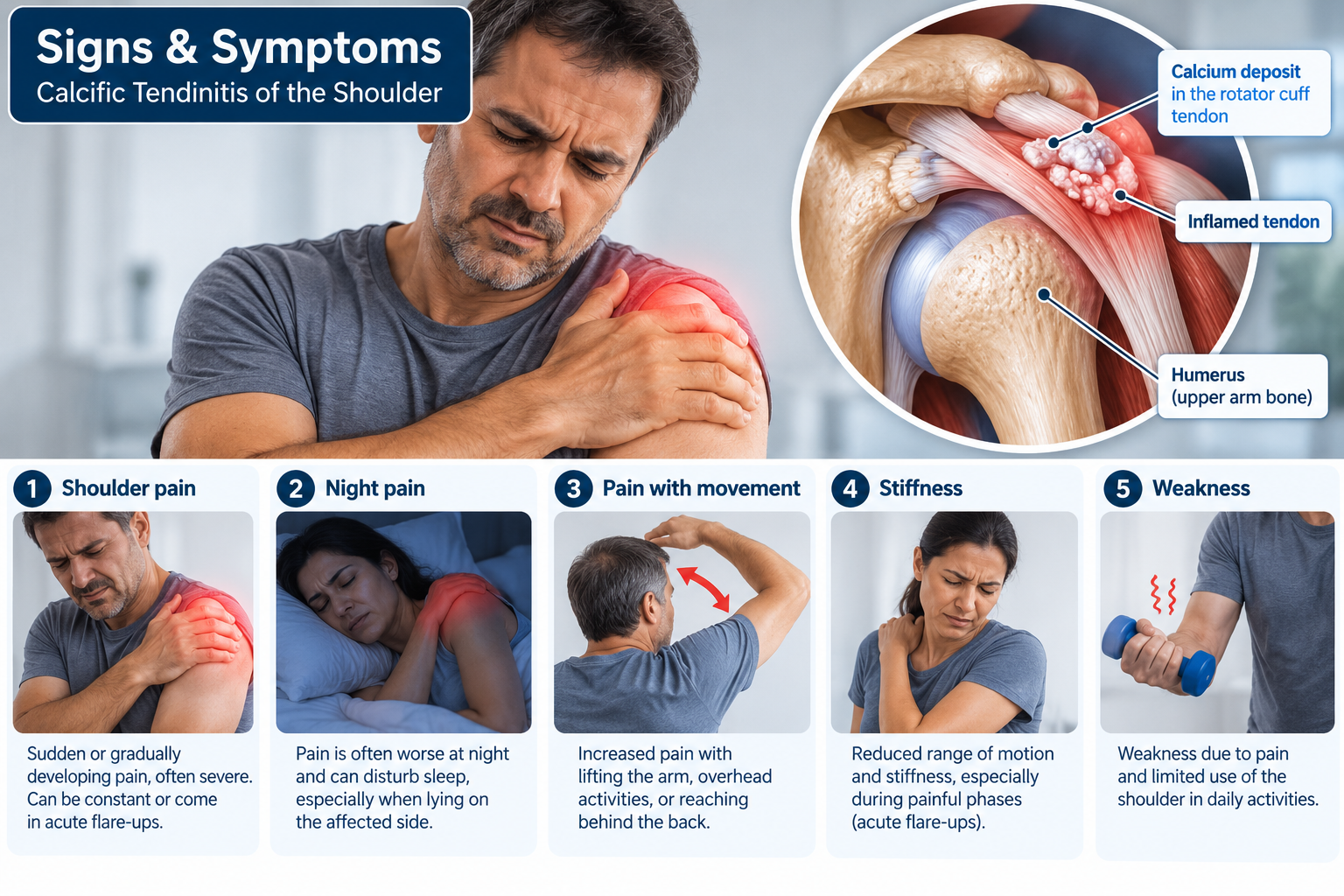
Calcific tendinitis involves the accumulation of calcium deposits within the rotator cuff tendons, leading to inflammation and acute shoulder pain..
Clinical examination

2. Signs & Symptoms

Sudden, severe throbbing shoulder pain—especially at night—accompanied by stiffness and limited arm movement during acute flare-ups.
Diagnostic imaging

3. Diagnosis & Imaging

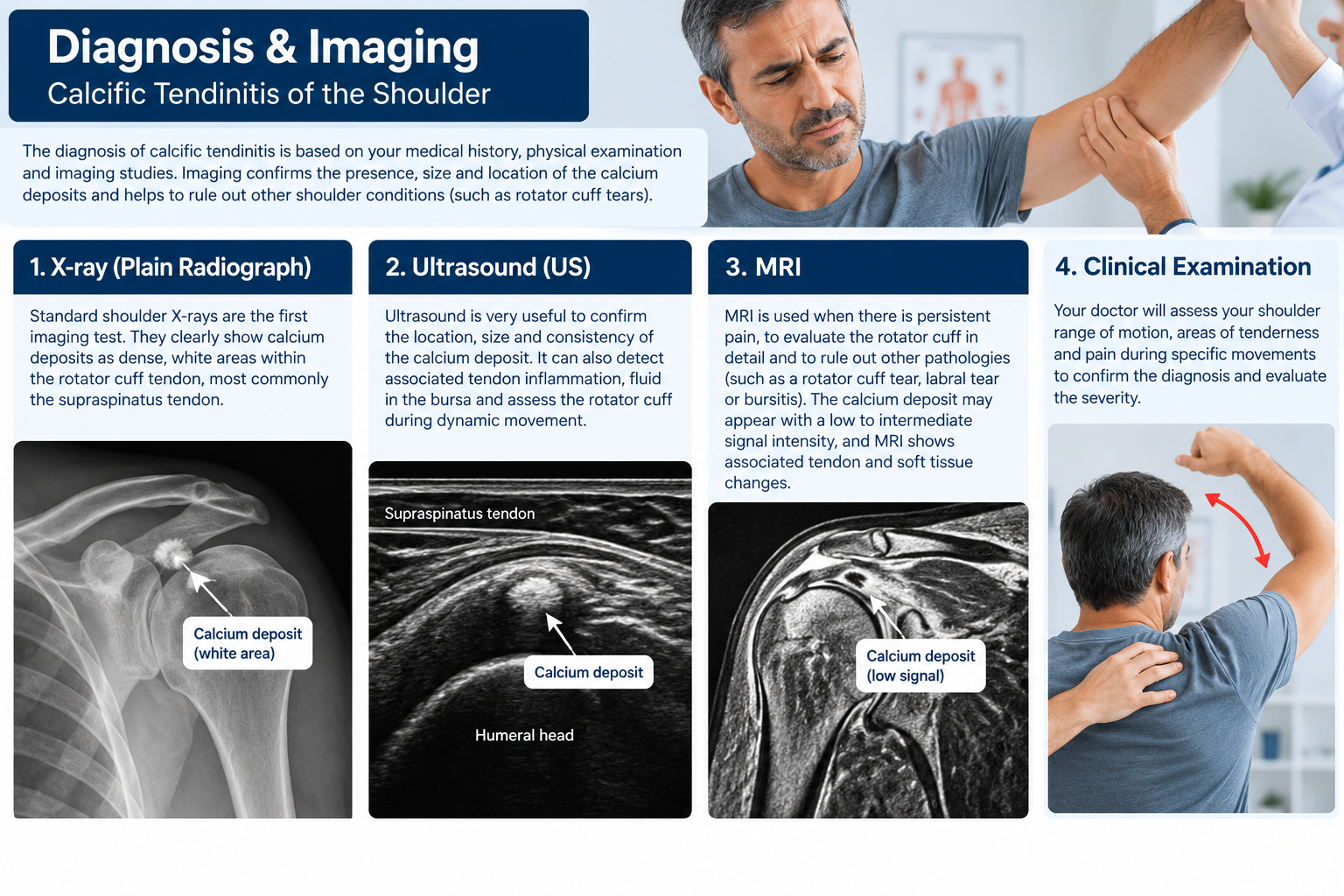
Confirmed primarily through standard shoulder X-rays showing calcium deposits, with ultrasound or MRI used to evaluate the tendon status.
Treatment

4. Treatment Options

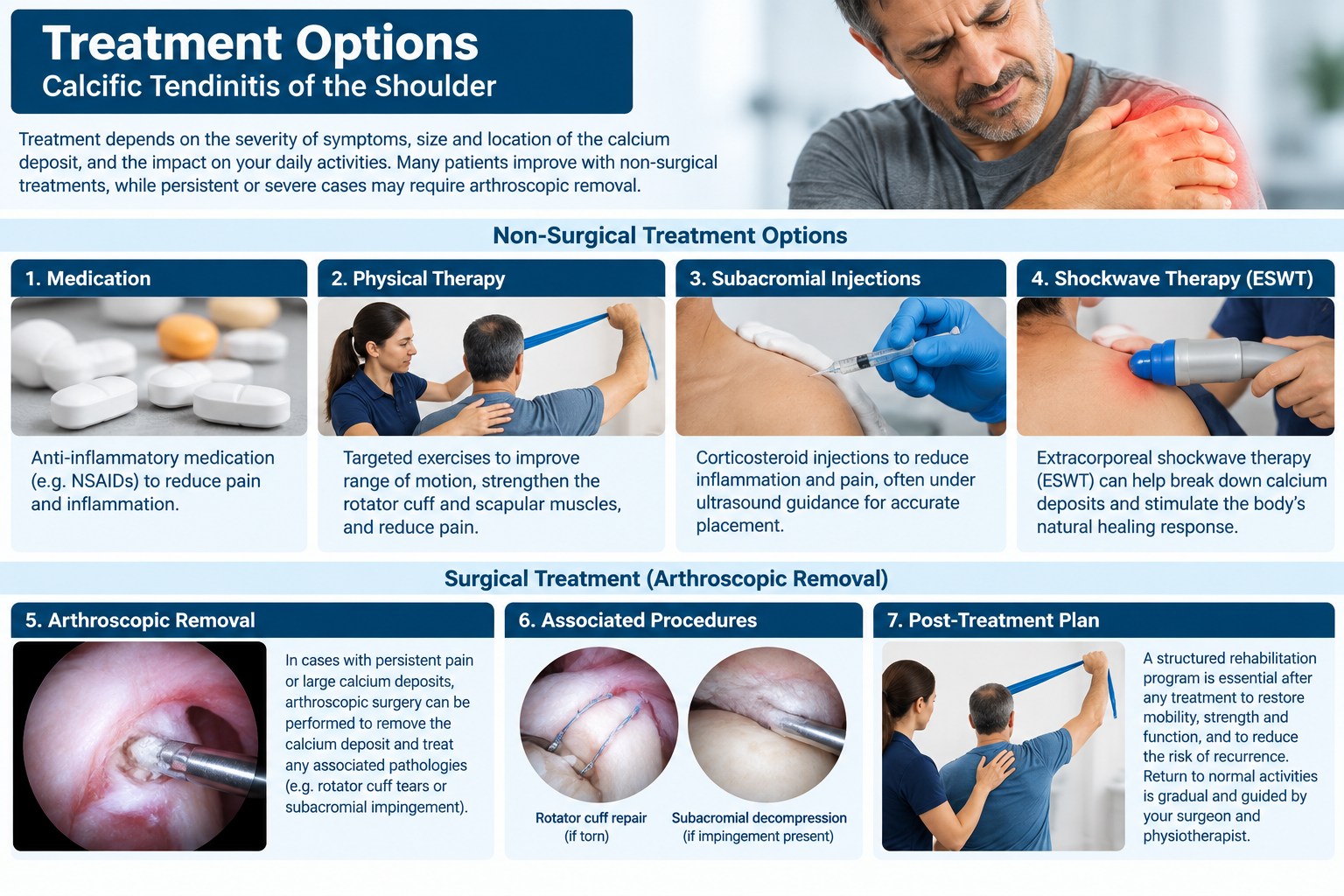
Includes anti-inflammatories, physical therapy, subacromial injections, shockwave therapy (ESWT), ultrasound-guided lavage, or arthroscopic removal.
Rehabilitation

5. Recovery & Rehabilitation

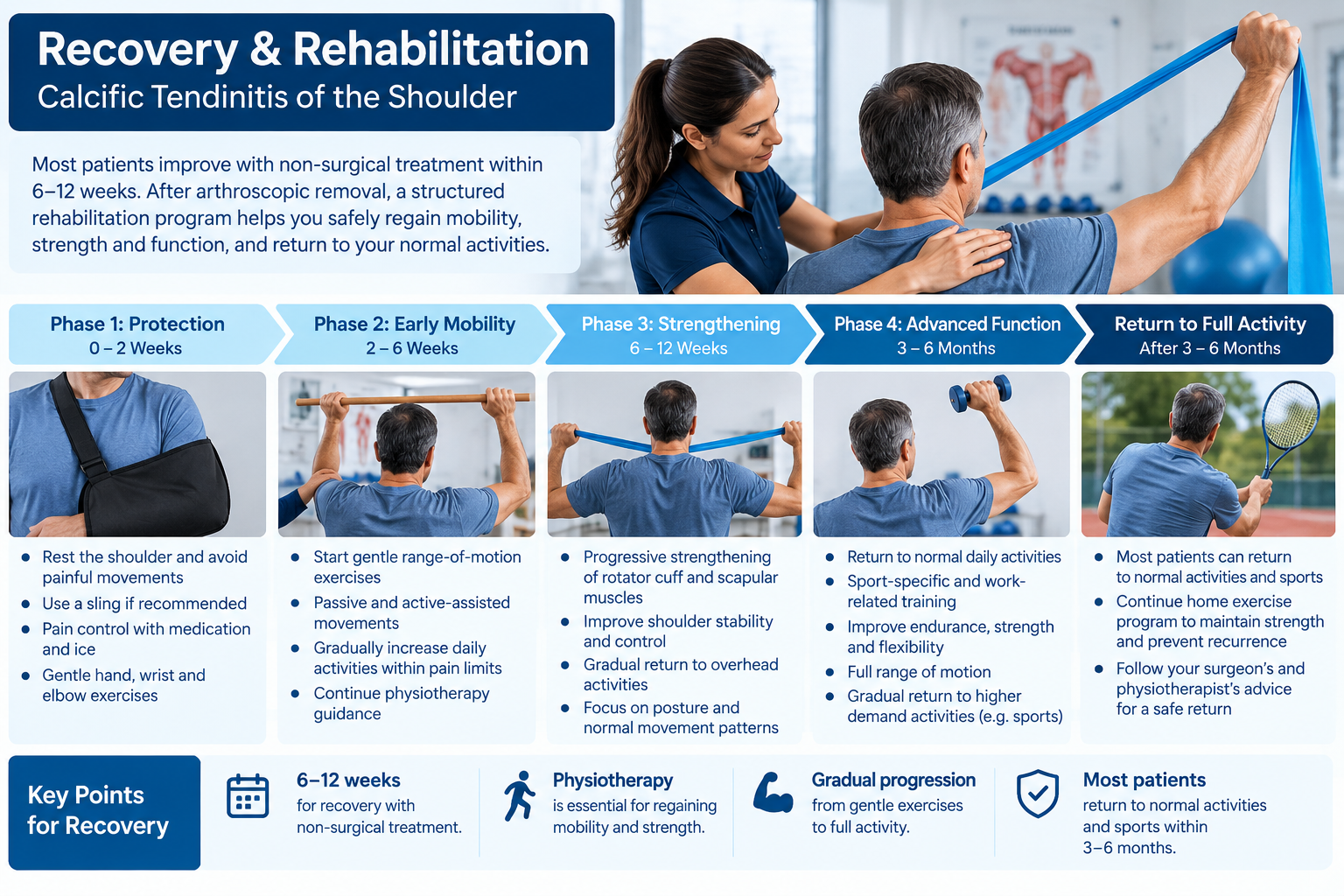
Non-surgical care typically restores function in 6–12 weeks. Post-arthroscopic rehabilitation focuses on gentle mobility followed by gradual strength training.

Dr. Yousef Muhammad
“ Clinical Note from Dr. Yousef Muhammad

As with the knee, surgery sits at the top of the ladder. Movement, strength and good pain control carry most patients comfortably for a long time first.

Dr. Yousef Muhammad
Dr. Yousef Muhammad
Consultant Orthopaedic Surgeon

Frequently Asked Questions

What are the main symptoms of Calcific Tendinitis of the shoulder?
The primary symptom is sudden, severe shoulder pain—often described as an intense ache or throbbing—that frequently worsens at night or when trying to sleep on the affected side. You may also experience significant stiffness and restricted shoulder movement, especially during the painful “resorption” phase when the body attempts to break down the calcium deposit.
What are the treatment options for Calcific Tendinitis?
Most cases respond well to non-surgical treatment. Options include non-steroidal anti-inflammatory medications (NSAIDs), targeted physical therapy, subacromial corticosteroid injections, and Extracorporeal Shockwave Therapy (ESWT) or ultrasound-guided needling (lavage/barbotage) to break up the deposit. Arthroscopic removal of the calcium deposit is reserved for persistent cases that do not respond to conservative management.
Why do calcium deposits build up in the shoulder tendon?
The exact cause isn’t fully understood, but calcific tendinitis occurs when calcium crystals accumulate within the rotator cuff tendons (most commonly the supraspinatus tendon). It is thought to result from localized reduced blood supply, micro-trauma, or natural cellular wear and tear rather than dietary calcium intake or injury.
Will the calcium deposit go away on its own, and how long is recovery?
Yes, in many cases, the body eventually reabsorbs the calcium deposit naturally, though this process can take several months and may cause acute pain flare-ups. Non-surgical treatment typically resolves symptoms within 6 to 12 weeks. If arthroscopic surgery is needed, recovery and rehab generally take 2 to 3 months to fully restore strength and mobility.
How is Calcific Tendinitis diagnosed?
Diagnosis is straightforward and usually confirmed with standard shoulder X-rays, which clearly visualize the size, density, and exact location of the calcium deposit. Diagnostic ultrasound or MRI may also be used to evaluate the health of the surrounding rotator cuff tendons and check for inflammation (bursitis).

Note: This information is for general education only and should not replace a consultation with your doctor.

International Medical References

Related Conditions

Book an Appointment

Secure your consultation today.

Book Appointment

WhatsApp Us

Quick response for your enquiries.

Chat on WhatsApp