حاصل على البورد الألماني دبلوم الفيفا DKG AGA GOTS
الرياض، المملكة العربية السعودية
Dr. Yousef Muhammad — Orthopaedic SurgeonPhone +966 11 522 2222
حالة في الركبة

عدم ثبات الرضفة

Symptoms, Diagnosis & Treatment Options

When the kneecap slips out of its groove — partly or completely — it can be alarming and tends to recur. Understanding why it happens points the way to the right treatment.

Dr. Yousef Muhammad
د. يوسف محمد
استشاري جراحة العظام بالبورد الألماني | الطب الرياضي | تنظير المفاصل | استبدال المفاصل
  • استشاري جراحة العظام حاصل على البورد الألماني
  • جراح ركبة معتمد من DKG
  • جراح تنظير مفاصل معتمد من AGA
  • طبيب رياضي معتمد من GOTS
  • دبلوم الفيفا في طب كرة القدم
  • International Experience (Germany & Middle East)
  • رئيس سابق لقسم جراحة العظام (ألمانيا)
  • أكثر من ١٤ عامًا من الخبرة

The kneecap normally glides up and down a groove (the trochlea) at the front of the thigh bone. In patellar instability, it slides out of that groove — usually towards the outer side — either partially (a subluxation) or completely (a dislocation).

رسم تشريحي

1. Anatomy & Overview

The kneecap normally glides up and down a groove (the trochlea) at the front of the thigh bone.

الفحص السريري

2. Signs & Symptoms

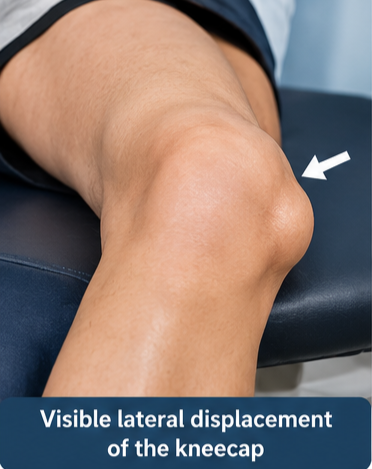
The kneecap visibly shifting — to the side, then often snapping back.

التصوير التشخيصي

3. Diagnosis & Imaging

Examination assesses how freely the kneecap can be pushed sideways and reproduces the patient’s apprehension.

العلاج

٤. خيارات العلاج

Rehabilitation: A first dislocation without major damage is usually treated with strengthening and bracing to restore control of the kneecap.

إعادة التأهيل

5. Recovery & Rehabilitation

After rehabilitation or surgery, a staged programme restores motion, then strength, then confidence in the knee.

Dr. Yousef Muhammad
ملاحظة سريرية من د. يوسف محمد

When the kneecap slips out of its groove — partly or completely — it can be alarming and tends to recur. Understanding why it happens points the way to the right treatment.

Dr. Yousef Muhammad
د. يوسف محمد
استشاري جراحة العظام

الأسئلة الشائعة

What are the symptoms of Patellar Instability?
The kneecap visibly shifting — to the side, then often snapping back. A sudden “giving way” — with the knee buckling under load. Pain and rapid swelling — after a dislocation episode. Apprehension — and a fear that the kneecap will slip again.
What causes Patellar Instability?
A shallow trochlear groove (trochlear dysplasia). A kneecap that sits high or too far to the outer side. Generally loose ligaments and muscle imbalance. A previous dislocation, which raises recurrence risk.
How is Patellar Instability diagnosed?
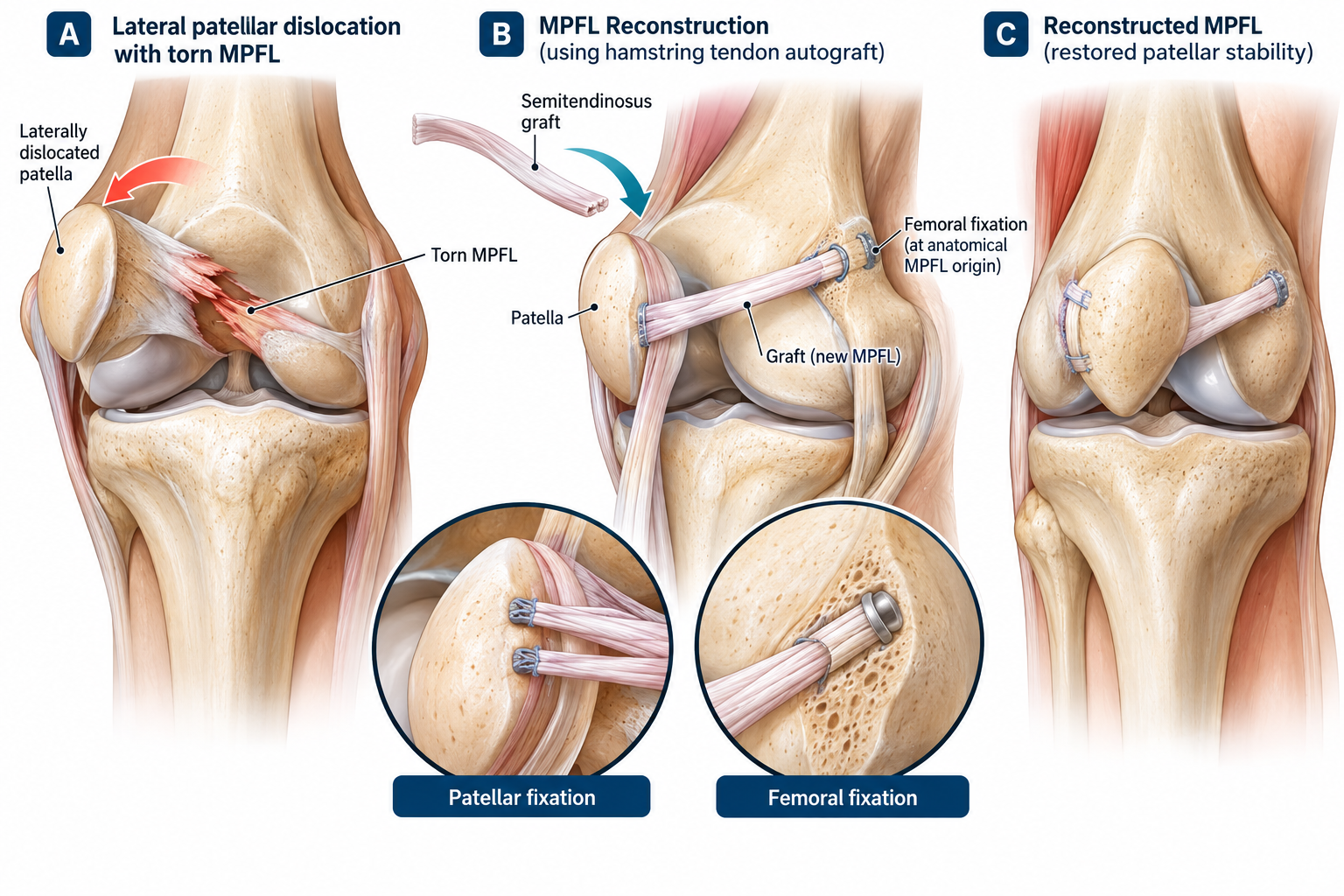
Examination assesses how freely the kneecap can be pushed sideways and reproduces the patient’s apprehension. X-rays and an MRI then reveal the underlying anatomy — the depth of the groove, the position of the kneecap, and damage to the stabilising ligament (the MPFL) — which together guide whether surgery is needed.
How is Patellar Instability treated?
Rehabilitation: A first dislocation without major damage is usually treated with strengthening and bracing to restore control of the kneecap. MPFL reconstruction: For recurrent instability, the key stabilising ligament is rebuilt with a graft to hold the kneecap in its groove. Bony realignment: Where anatomy is the driver, the attachment of the kneecap tendon or the groove itself may be reshaped.
ماذا يتضمن التعافي؟
After rehabilitation or surgery, a staged programme restores motion, then strength, then confidence in the knee. Most patients return to sport within three to six months. Modern stabilising surgery is highly effective at preventing further dislocations when the underlying cause is correctly addressed.

ملاحظة: هذه المعلومات للتثقيف العام فقط ولا تغني عن استشارة طبيبك.

مراجع طبية دولية

حالات ذات صلة

احجز موعدًا

احجز استشارتك اليوم.

احجز موعدًا

راسلنا على واتساب

رد سريع على استفساراتك.

الدردشة عبر واتساب