حاصل على البورد الألماني دبلوم الفيفا DKG AGA GOTS
الرياض، المملكة العربية السعودية
Dr. Yousef Muhammad — Orthopaedic SurgeonPhone +966 11 522 2222
حالة في الكتف

تمزق الكفة المدورة

Symptoms, Diagnosis & Treatment Options

The rotator cuff is the group of muscles and tendons that lift and rotate your arm. Tears are common with age and overuse — and respond well to the right plan.

Dr. Yousef Muhammad
د. يوسف محمد
استشاري جراحة العظام بالبورد الألماني | الطب الرياضي | تنظير المفاصل | استبدال المفاصل
  • استشاري جراحة العظام حاصل على البورد الألماني
  • جراح ركبة معتمد من DKG
  • جراح تنظير مفاصل معتمد من AGA
  • طبيب رياضي معتمد من GOTS
  • دبلوم الفيفا في طب كرة القدم
  • International Experience (Germany & Middle East)
  • رئيس سابق لقسم جراحة العظام (ألمانيا)
  • أكثر من ١٤ عامًا من الخبرة

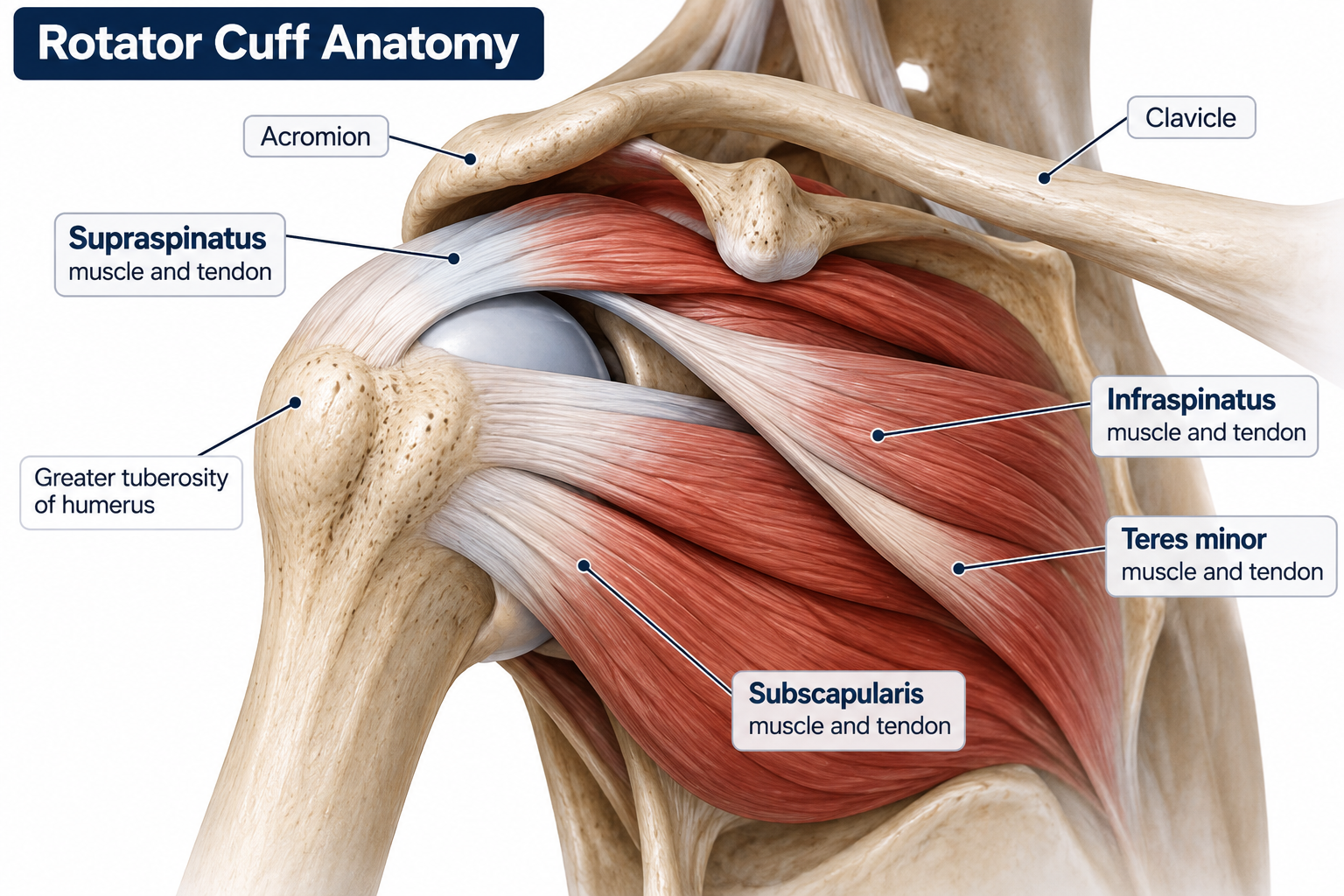
The rotator cuff is a group of four muscles and their tendons that wrap around the top of the arm bone, holding it in the shoulder socket and powering lifting and rotation.

رسم تشريحي

1. Anatomy & Overview

The rotator cuff is a group of four muscles and their tendons that wrap around the top of the arm bone, holding it in the shoulder socket and powering lifting and rotation.

الفحص السريري

2. Signs & Symptoms

Pain — on the outer shoulder, often worse at night and when lying on that side.

التصوير التشخيصي

3. Diagnosis & Imaging

Examination tests the strength and range of each cuff muscle to localise the problem.

العلاج

٤. خيارات العلاج

Many tears — particularly partial and degenerative ones — are managed successfully without surgery.

إعادة التأهيل

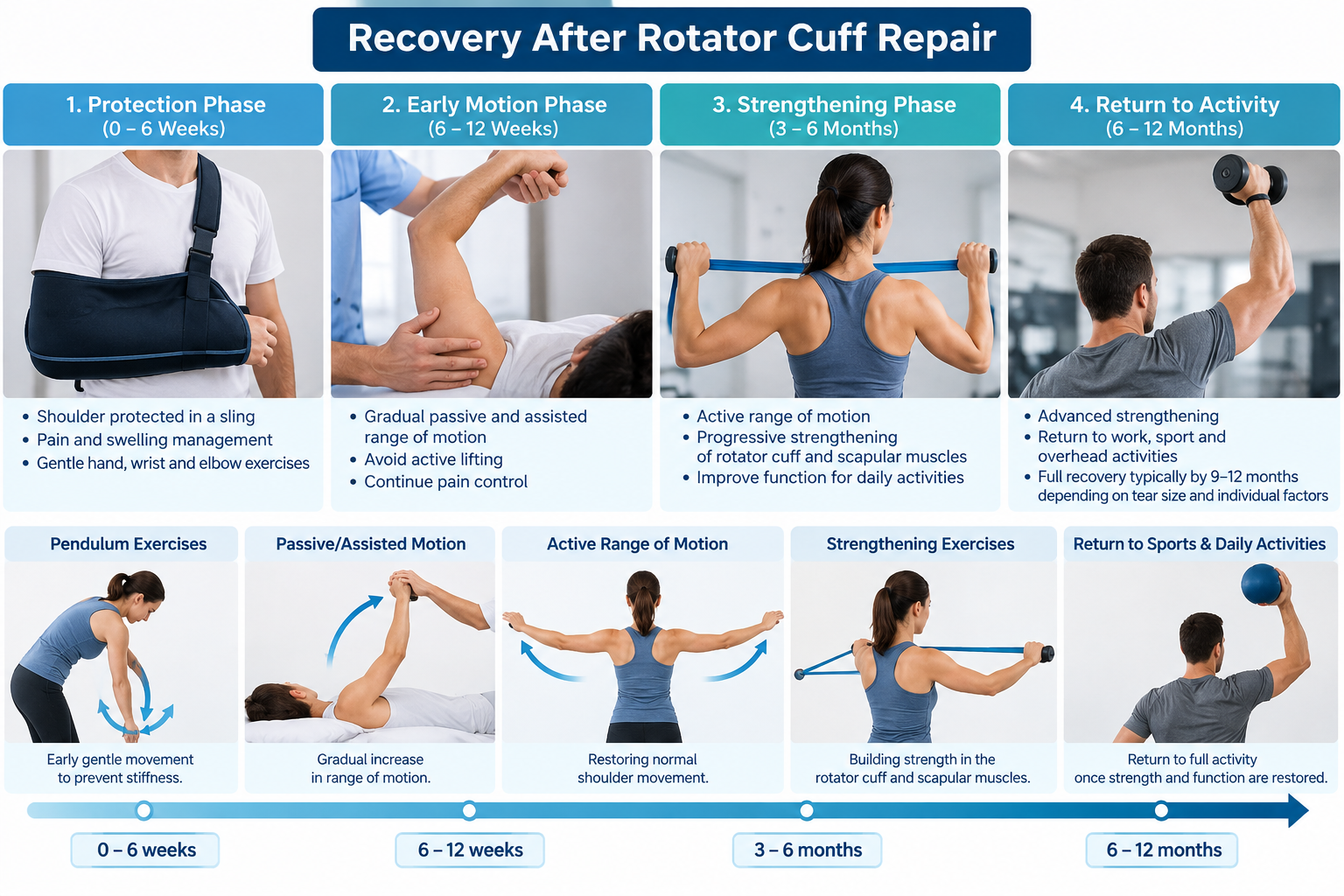
5. Recovery & Rehabilitation

After a repair, the shoulder is protected in a sling while the tendon heals to the bone — this early protection is essential.

Dr. Yousef Muhammad
ملاحظة سريرية من د. يوسف محمد

The rotator cuff is the group of muscles and tendons that lift and rotate your arm. Tears are common with age and overuse — and respond well to the right plan.

Dr. Yousef Muhammad
د. يوسف محمد
استشاري جراحة العظام

الأسئلة الشائعة

What are the symptoms of Rotator Cuff Tear?
Pain — on the outer shoulder, often worse at night and when lying on that side. Weakness — lifting or rotating the arm, especially overhead. Difficulty with overhead tasks — — reaching a shelf, brushing hair, dressing. A crackling sensation — when moving the shoulder in certain positions. Loss of strength — that can make the arm feel unreliable.
What causes Rotator Cuff Tear?
Age-related tendon degeneration (most common over 50). Repetitive overhead activity — painting, construction, certain sports. A single traumatic injury, such as a fall onto the arm. Reduced blood supply to the tendon with age. Bony spurs that rub and fray the tendon over time.
How is Rotator Cuff Tear diagnosed?
Examination tests the strength and range of each cuff muscle to localise the problem. Ultrasound and MRI both visualise the tendons — confirming whether a tear is partial or full-thickness, its size, and the quality of the muscle, all of which guide treatment.
How is Rotator Cuff Tear treated?
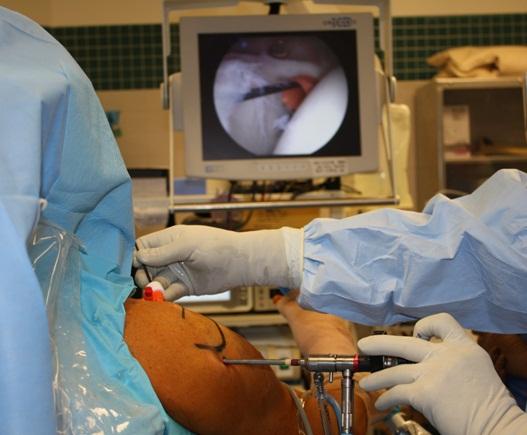
Many tears — particularly partial and degenerative ones — are managed successfully without surgery. The decision balances tear size, your age, activity and how much the shoulder limits you. Physiotherapy: A structured programme strengthens the surrounding muscles to compensate and reduce pain — effective for many partial tears. Arthroscopic repair: The torn tendon is reattached to the bone through keyhole incisions, restoring strength for larger or full-thickness tears.
ماذا يتضمن التعافي؟
After a repair, the shoulder is protected in a sling while the tendon heals to the bone — this early protection is essential. A staged programme then rebuilds motion and strength over three to six months. Most patients regain comfortable, functional shoulders and return to the activities that matter to them.

ملاحظة: هذه المعلومات للتثقيف العام فقط ولا تغني عن استشارة طبيبك.

مراجع طبية دولية

حالات ذات صلة

احجز موعدًا

احجز استشارتك اليوم.

احجز موعدًا

راسلنا على واتساب

رد سريع على استفساراتك.

الدردشة عبر واتساب