

Biceps Tendinitis & Lesions
Biceps tendinitis and biceps tendon lesions involve inflammation, fraying, or instability of the long head of the biceps tendon as it passes through the bicipital groove of the shoulder. Frequently associated with rotator cuff tears or shoulder impingement, these condition causes anterior shoulder pain during lifting and pulling activities. Targeted non-surgical therapies or modern arthroscopic procedures (biceps tenodesis/tenotomy) effectively eliminate pain and restore arm function.

- German Board-Certified Orthopaedic Surgeon
- DKG Certified Knee Surgeon
- AGA Certified Arthroscopic Surgeon
- GOTS Certified Sports Physician
- FIFA Diploma in Football Medicine
- International Experience (Germany & GCC)
- Former Chief of Orthopaedic Surgery (Germany)
- 14+ Years of Experience
The long head of the biceps tendon plays an important role in stabilizing the shoulder joint and assisting in arm elevation and rotation. Repetitive strain, mechanical friction, or traumatic injuries can cause painful inflammation (tendinitis), tearing, or subluxation out of its groove. Identifying whether the biceps pathology is isolated or secondary to an underlying rotator cuff problem is key to achieving durable relief.
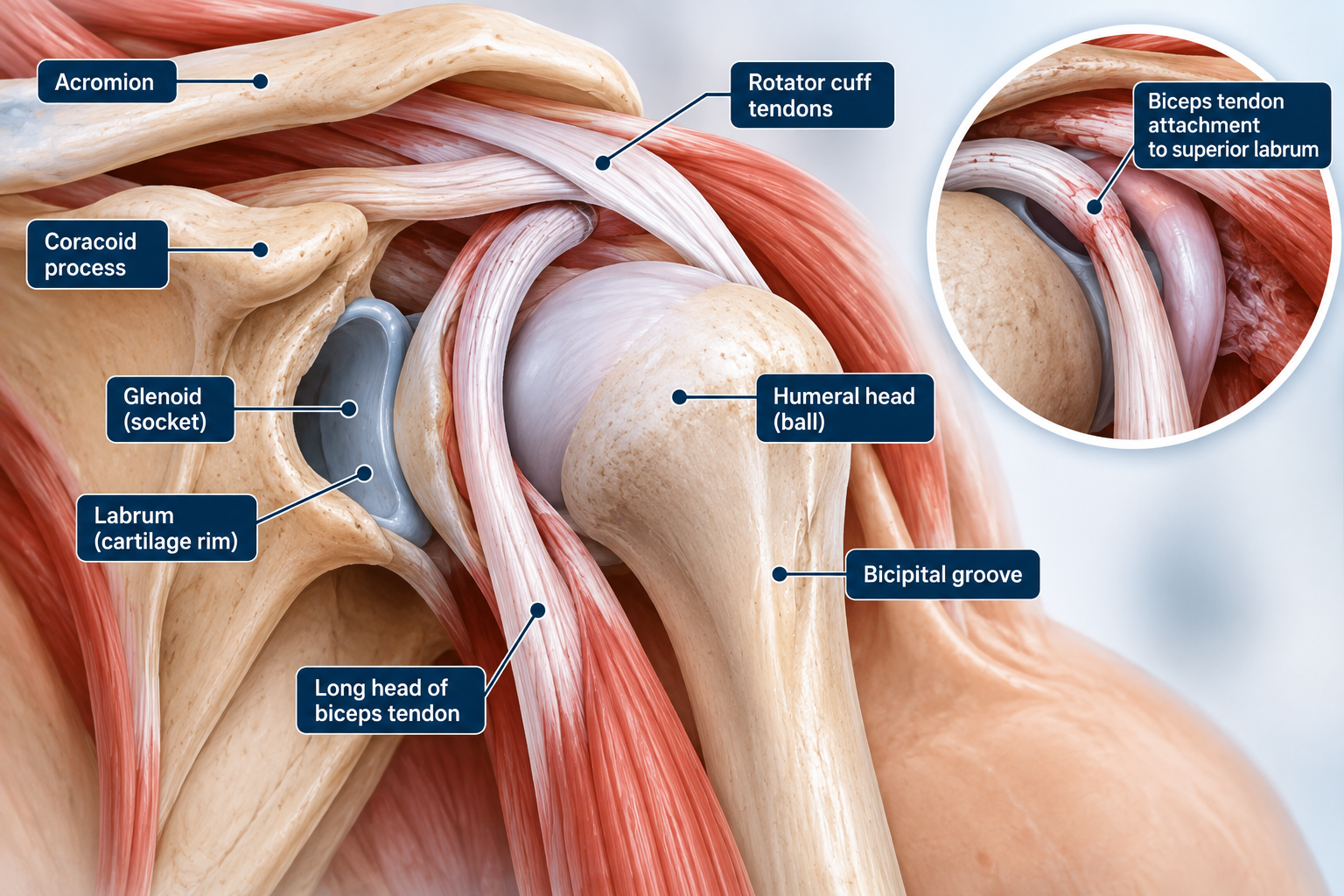 Anatomy diagram
1. Anatomy & Overview: Bicipital Groove & Long Head Anchor
The long head of the biceps tendon travels through the bicipital groove into the joint socket. Repetitive motion causes friction, inflammation, and structural tendon degeneration.
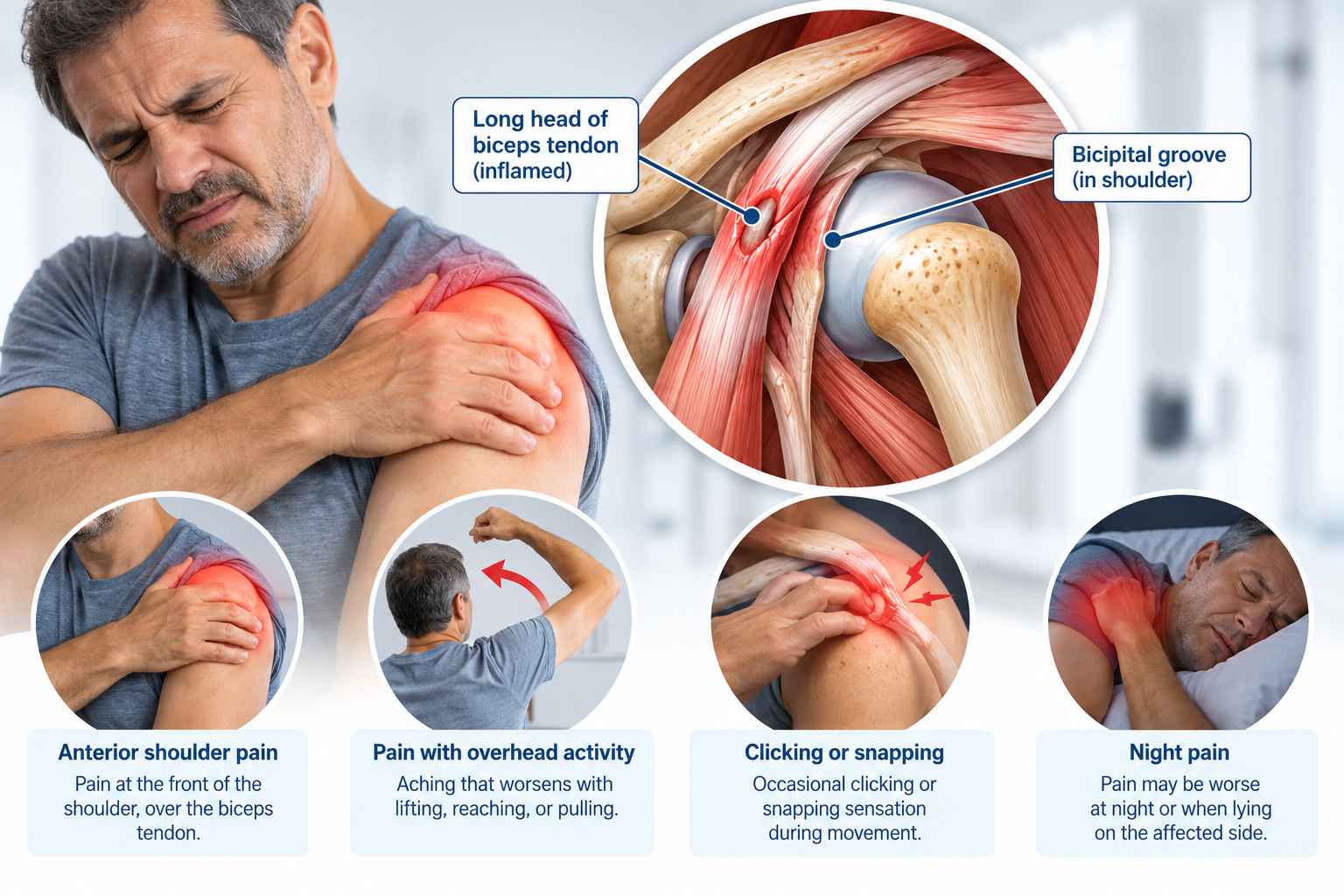 Clinical examination
2. Signs & Symptoms: Anterior Shoulder Pain & Tenderness
Patients experience localized pain at the front of the shoulder, aching that worsens with overhead lifting or pulling, and occasional clicking or snapping sensations.
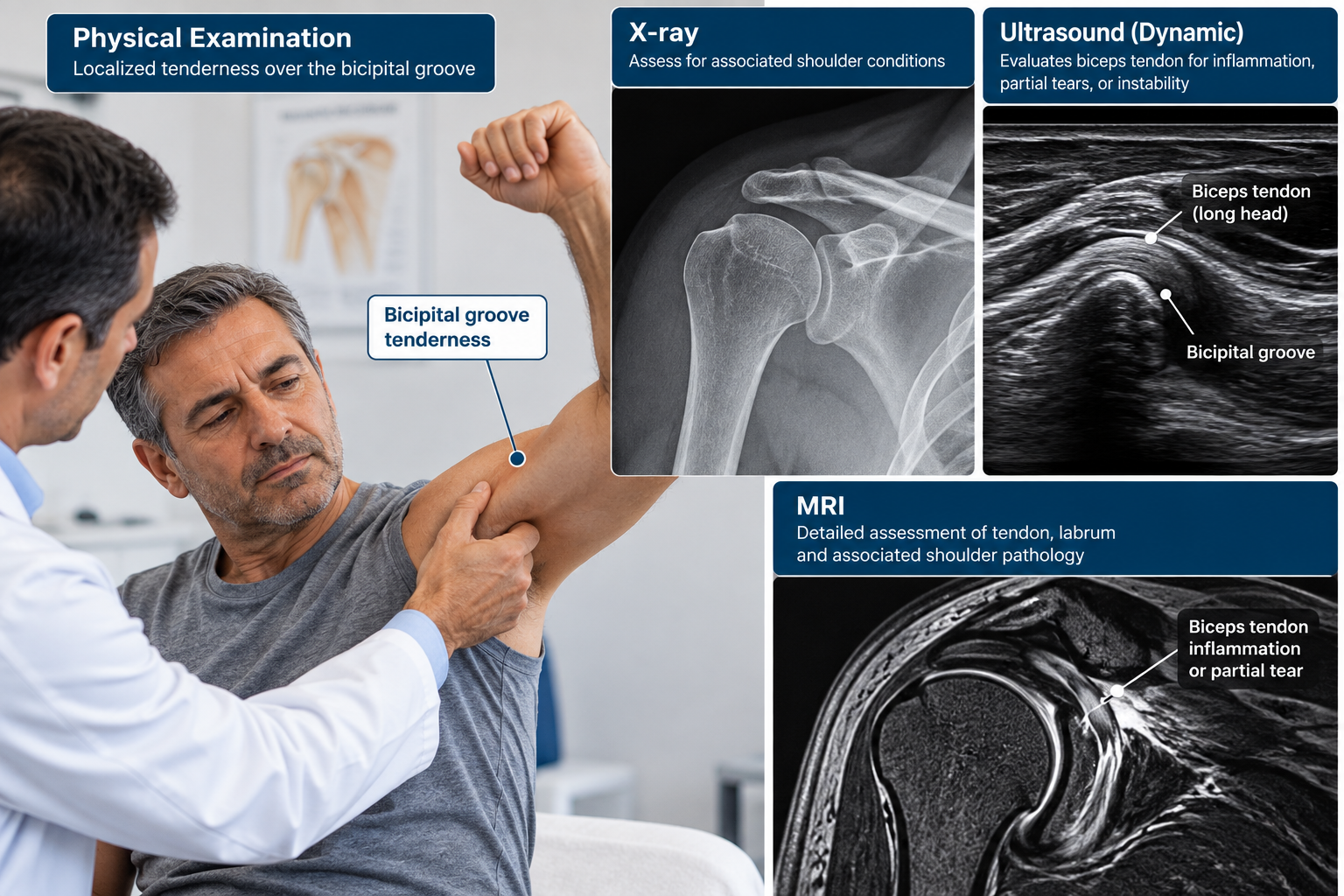 Diagnostic imaging
3. Diagnosis & Imaging: Physical Tests & Dynamic Ultrasound / MRI
Targeted physical examination (Speed’s and Yergason’s tests) combined with high-resolution Ultrasound or MRI to evaluate tendon inflammation, tearing, or displacement.
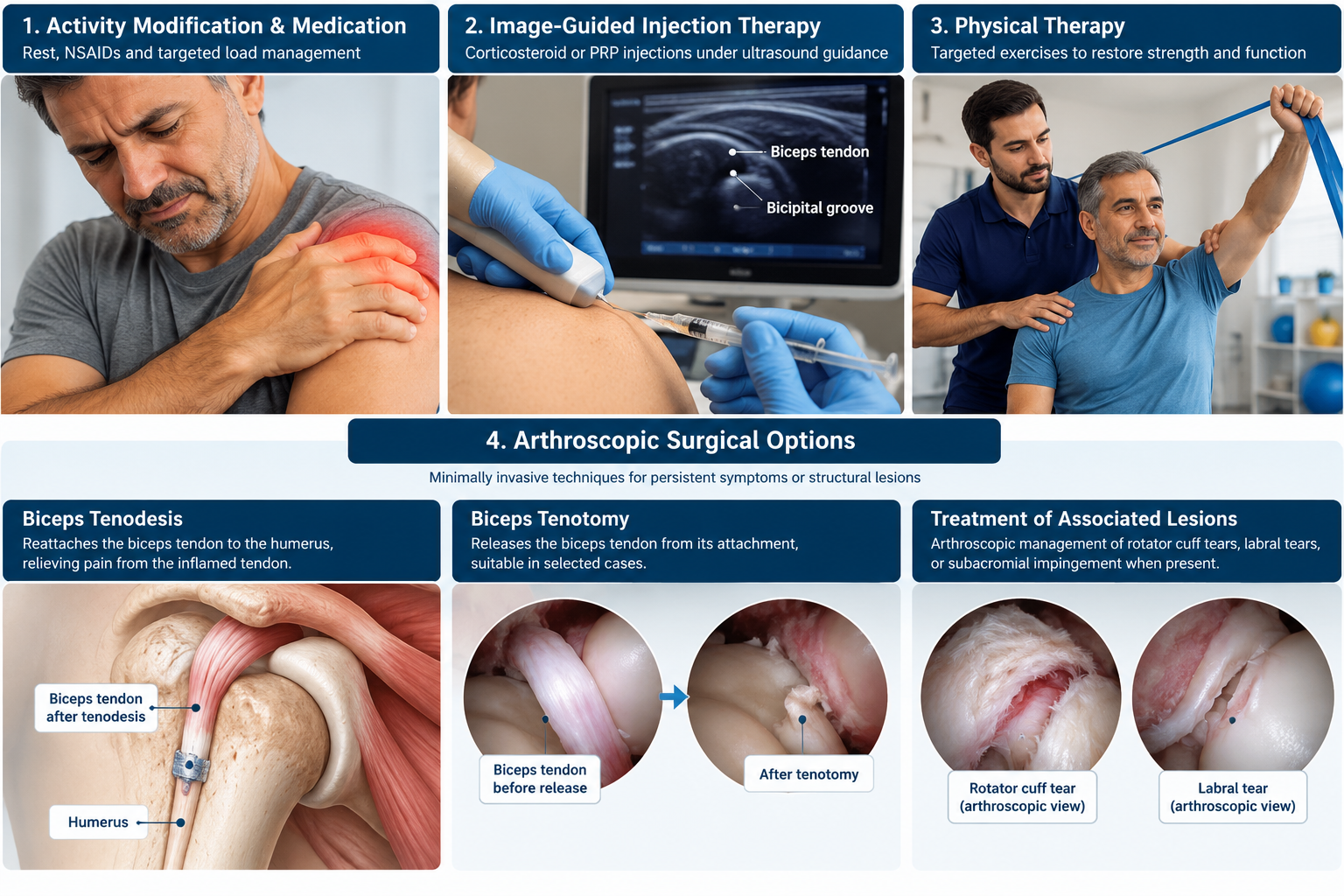 Treatment
4. Treatment Options: Targeted Injections & Arthroscopic Surgery
Managed conservatively with rest, targeted physical therapy, and ultrasound-guided injections. Persistent cases benefit from arthroscopic biceps tenodesis or tenotomy.
 Rehabilitation
5. Recovery & Rehabilitation: Guided Physical Therapy & Biceps Recovery
Post-procedure care involves temporary protection followed by structured physical therapy to safely rebuild elbow flexion and shoulder strength without tendon overload.
“Anterior shoulder pain is frequently driven by inflammation or instability of the biceps tendon. Because it often coexists with rotator cuff or labral issues, an accurate diagnosis ensures we treat the root cause—offering targeted relief through conservative care or precise arthroscopic techniques.”

Frequently Asked Questions
What causes Biceps Tendinitis in the shoulder?
How do I know if my biceps tendon is torn?
What is the difference between Biceps Tenodesis and Biceps Tenotomy?
What is the recovery time after biceps tenodesis surgery?
Can biceps tendinitis be treated without surgery?
Note: This information is for general education only and should not replace a consultation with your doctor.
International Medical References




Related Conditions


Book an Appointment
Secure your consultation today.
WhatsApp Us
Quick response for your enquiries.